
CONTENT WARNING
Materials in the Library of Virginia’s collections contain historical terms, phrases, and images that are offensive to modern readers. These include demeaning and dehumanizing references to race, ethnicity, and nationality; enslaved or free status; physical and mental ability; and gender and sexual orientation.
Context
In late seventeenth-century Virginia, the wealth gap grew as wealthy plantation owners amassed land and consolidated political power while the middle and lower classes found themselves with few opportunities for advancement. The political power in the colony rested solely in the hands of landowning white men, who were the only ones allowed to vote. Many colonists who were not part of the elite believed that their taxes were too high and that the money was misspent on building unneeded forts or for buying large tracts of land the king had granted to his favorites. They resented the fact that members of the Governor’s Council were exempt from paying taxes and that taxes were paid in tobacco, which favored the large landowners. They were also angry at having to pay for their local officials to attend too-frequent sessions of the House of Burgesses. Generally, those who were unhappy believed that their local officials abused power, especially since they had no say in how local justices of the peace determined county tax rates.
Nathaniel Bacon (1647–1676) immigrated from England to Virginia in 1674. He developed grievances of his own and was able to gain the support of many disfranchised colonists. Bacon was a member of the British gentry and related to several prominent Virginians. Governor Sir William Berkeley appointed Bacon to his advisory council in 1675, but they quickly developed an adversarial relationship. Bacon purchased 820 acres in Henrico, then on the colony's western frontier. Bacon believed that the governor treated Indigenous peoples in the region too favorably and that he was not doing enough to protect the frontier from attack.
A conflict erupted between Virginians and an Indigenous tribe that had not formally allied with Virginia. When Governor Berkeley refused Bacon’s demand in 1676 for a commission to fight against Indigenous tribes, Bacon rounded up a volunteer militia. He persuaded the Occaneechi to join his fight against Susquehannocks who had attacked the colony, but he subsequently destroyed the Occaneechi town. News of Bacon's exploits spread throughout Virginia, and many began to support his cause, which seemed to be directed against colonial officials of whom they were already suspicious.
In the midst of what was becoming an outright rebellion, Governor Berkeley called for the first general election in sixteen years for members of the House of Burgesses and welcomed all to bring their grievances and to call for his removal. This prompted many men to vote, whether they were eligible or not. Bacon and others who were unhappy with the colony's government were elected, although Bacon did not attend the Assembly. This newly-elected group of burgesses passed a series of laws in June 1676 that addressed numerous grievances of the non-elite colonists. They instituted universal white male suffrage and one-year terms for the locally powerful offices of sheriff and justice of the peace. Positions on church vestries, which helped manage local government, were made elective instead of appointed. They passed a law requiring local officials to include residents of the county when determining tax rates. They rescinded the tax relief for members of the governor’s council. They also banned all trade with Indigenous people and restricted their movements.
At the beginning of the Assembly, Bacon apologized for his actions and Governor Berkeley briefly pardoned him after having declared Bacon in rebellion against the colony. But just before the Assembly adjourned, Bacon demanded a commission to wage war against Virginia Indians. The governor agreed under pressure, but in July declared Bacon in rebellion again and recruited men to fight him. Bacon marched to Middle Plantation (now Williamsburg) with hundreds of men. He issued a declaration of grievances against Governor Berkeley and declared himself the General of Virginia, by popular consent.
Bacon’s and Berkeley’s forces engaged in a civil war. Bacon attacked the friendly Pamunkey tribe in Dragon Swamp, and in September he burned Jamestown to prevent Berkeley from retaking it. Berkeley allied with Virginia Indians to help fight against Bacon’s forces, which were weakened tremendously when Bacon died of dysentery in October 1676. Ultimately, Berkeley’s forces gained the upper hand and defeated the rebels before a force of English soldiers sent by the king arrived in Virginia. Afterwards almost two dozen leaders of the rebellion were hanged as traitors.
Bacon’s rebellion in the short term was unsuccessful. The king demanded that laws passed by the June 1676 Assembly—later incorrectly known as "Bacon's Laws”—had to be rescinded, which they were in February 1677. Governor Berkeley was forced to return to England to explain his version of events to the king, but died before he could do so. Bacon’s Rebellion revealed a deep discontent among the middling and lower classes of Virginia who were disfranchised politically and disadvantaged economically. In the wake of the rebellion, Virginia's Indigenous tribes faced increasingly hostile and restrictive legislation.
Bacon's Rebellion was long mistakenly interpreted as an early rebellion against British tyranny, but many of its supporters were upset with local governance in the colony and Nathaniel Bacon framed his actions as supporting the crown against a corrupt governor and council. Some historians have argued that because many of the rebels had been indentured servants, wealthy Virginians began to favor purchasing enslaved Africans as a preferred method of labor to reduce the number of landless discontented men in the colony. However, slavery increased rapidly in Virginia for a variety of economic and agricultural reasons as well.
Citation: Excerpts from A Repertory of the General County Grievances of Virginia, Oct. 15, 1677, Public Record Office, Colonial Office Papers 5/1371, National Archives, Kew, England (available on Virginia Colonial Records Project microfilm reel 32, Library of Virginia).
Learn more about Bacon's Rebellion in Encyclopedia Virginia.
Standards
Suggested Questions
Pre-Activity
Map It: Use a modern map that includes boundaries of Virginia's counties (find one here: virginia-county-map-multi-colored-000000.png (3000×1597). Note that Nansemond County is now the city of Suffolk, and that Rappahannock County of the 1670s was later divided into Richmond and Essex Counties. Look at these areas, and write out answers to the following questions:
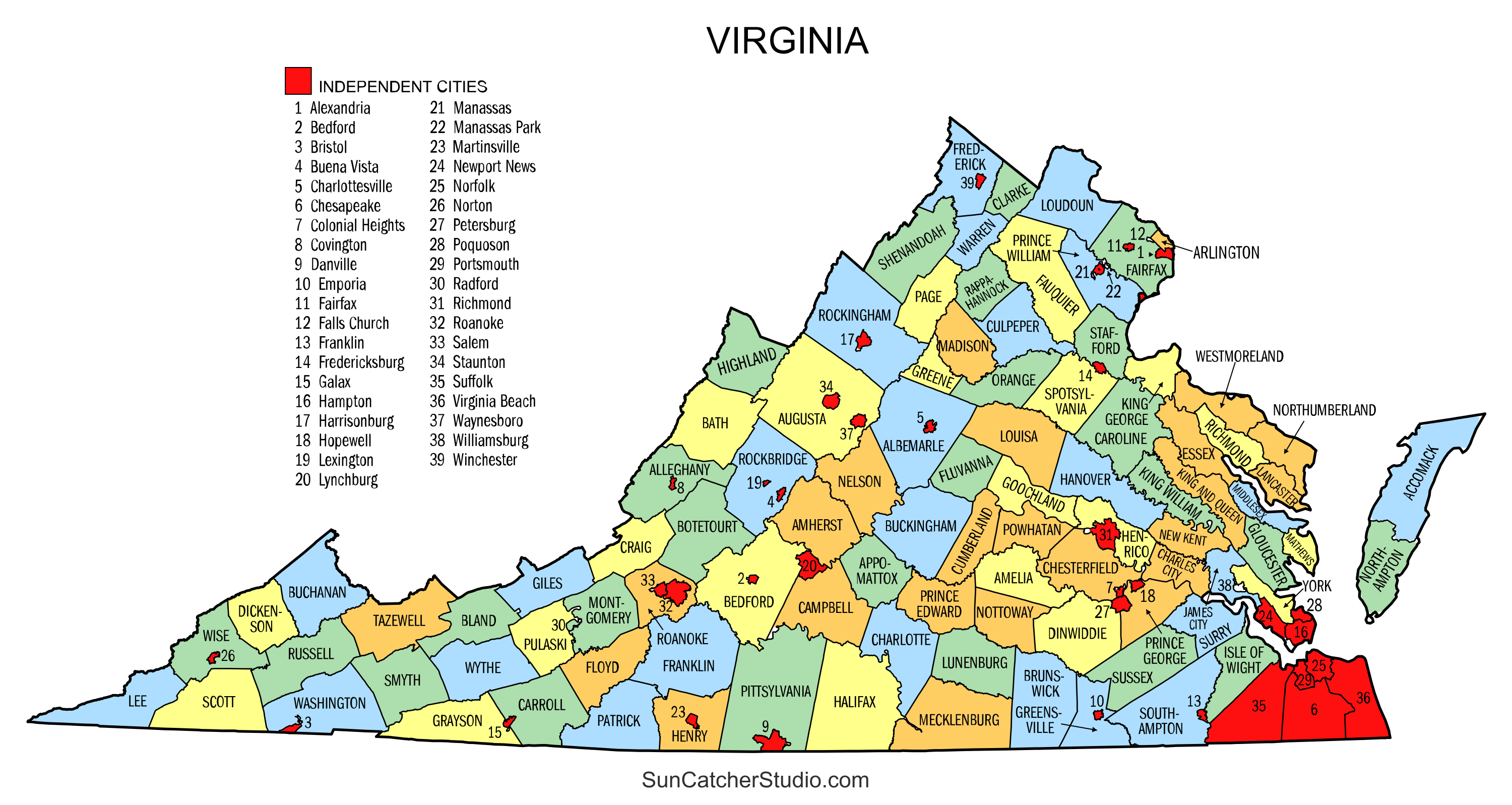
- What do you think about the requests to move the colony’s capitol from Jamestowne (located in James City County)? How difficult do you think it would have been for people to travel to the seat of the colony's government, and why?
- Residents of Rappahannock County (now Richmond and Essex Counties) argued that they were on the frontier. What does that tell you about English expansion by that time?
- Residents of Nansemond County (now part of Suffolk city) had the most radical of grievances of this group and also argued that the people who supported Bacon had not heard from the governor that Bacon’s actions were treasonous. How might their geographical location in the colony account for this, and why?
Post-Activities
Infographic: Read the grievances from residents of some of Virginia's counties. Fill out the attached activity chart, finding commonalities and differences within the grievances. What are the themes you notice? Note the responses from the commissioners of the British crown. Why do you think the commissioners responded as they did to these grievances?
In Their Shoes: Imagine you were a member of the royal commission that traveled to the counties to collect the grievances. Write a report for the king explaining what you think are the major issues, and why. Tell the king about how you responded to the counties, and why. What ongoing problems could you anticipate coming up as a result of your responses? How would you identify and describe those problems to the king?