
Browse Items (235 total)
Rosenwald Schools in Virginia, Southern Workman Article, 1922

Prior to the Civil War, Virginia did not have a statewide public education system. Wealthy Virginians, including some free Black people, sent their children to private academies or hired tutors. The state maintained a fund to provide education for a…
Booker T. Washington Dines at the White House, Editorial Cartoon, 1901

On October 16, 1901, President Theodore Roosevelt invited the esteemed Black educator and leader Booker T. Washington to dine at the White House. This meal marked the first time that an African American was invited to a formal dinner at the White…
Robert Cromwell, Civil War Diary, 1864

Robert Cromwell’s diary, collected as part of the Library of Virginia’s Civil War Sesquicentennial Project, illustrates the ways in which average soldiers experienced the Civil War. A New Yorker from a large Quaker family, Robert Cromwell had moved…
Hippodrome Theater in Richmond's Jackson Ward, 1910s
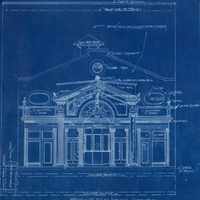
The Hippodrome Theater, located at 530 North 2nd Street in Richmond’s historic Jackson Ward neighborhood, stands as a significant landmark in Virginia history. Commissioned in 1912 by entertainment entrepreneur Amanda E. Thorpe, the Hippodrome…
Lesson Plan - Indigenous and English Relations in 17th Century Virginia

The period of first contact between Indigenous people and English colonists in 1607 until the end of Bacon’s Rebellion can be described as a time featuring periods of intermittent uneasy coexistence and warfare. When Captain John Smith explored the…
Lesson Plan - Cold War Politics and Culture in the 20th Century United States
After the Soviet Union launched a test nuclear missile in 1949, the "Cold War" between the U.S. and U.S.S.R. intensified. As each superpower stockpiled more nuclear weapons, the United States fashioned scenarios about what might happen if the…
Lesson Plan – Virginia's Coal Industry, 19th and 20th Centuries
Historically, coal has been one of Virginia’s most valuable natural resources. The first coal mines were developed after deposits were discovered early in the 1700s in Chesterfield County. Although Chesterfield exported the most coal before the Civil…
Lesson Plan - Mapping Revolutionary War Turning Points in Virginia
In the eighteenth century, Virginia's location on the mid-Atlantic seaboard was a key point along colonial trade routes, communication corridors, and military supply lines. Virginia also boasted natural harbors and successful ports in the areas of…
Jack Jouett's Ride, 1781

During the American Revolution, many ordinary people took extraordinary actions in defiance of the British government. From Paul Revere’s ride to warn Massachusetts residents about British troops on the move to Kate Barry’s trek through the South…
Public Assemblages Act for the Separation of Races, 1926
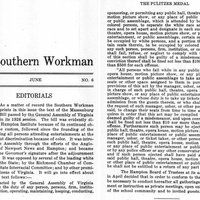
After the U.S. Supreme Court determined in 1896 that “separate but equal” was not unconstitutional in Plessy v. Ferguson, southern state legislatures passed a flurry of segregation laws. In truth, Virginia had already begun codifying segregation in…