
Browse Items (235 total)
Robert Cromwell, Civil War Diary, 1864

Robert Cromwell’s diary, collected as part of the Library of Virginia’s Civil War Sesquicentennial Project, illustrates the ways in which average soldiers experienced the Civil War. A New Yorker from a large Quaker family, Robert Cromwell had moved…
Adolphus, Contract to Be Hired Out, 1865

Hiring out enslaved men, women, and children was a common business arrangement among Virginians prior to emancipation and the abolishment of slavery with the Thirteenth Amendment to the U.S. Constitution. The practice of hiring out, which occurred in…
Resolutions Adopted by a Meeting of the People of Powhatan County, 1865
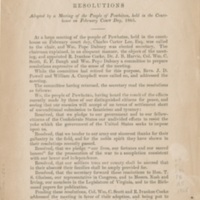
On February 3, 1865, Confederate Vice President Alexander H. Stephens and two other commissioners met with United States President Abraham Lincoln on the steamship River Queen near Fort Monroe in Hampton to discuss a potential treaty to end the Civil…
Confederate Parole Pass, 1865

On April 9, 1865, Confederate General Robert E. Lee surrendered the Army of Northern Virginia to General Ulysses S. Grant at Appomattox Court House. The surrender effectively ended the American Civil War in Virginia, although fighting continued in…
Edmund Bradford Seeks a Pardon, 1865

The power of the president to pardon those who commit offenses against the United States is enumerated in the Article Two of the U. S. Constitution. A presidential pardon is an executive order granting clemency for a conviction of a crime, with the…
Equal Suffrage Address, Norfolk, 1865

Even before the end of the Civil War, newly freed Black people called on the government to grant them equal suffrage (the right to vote). A committee of Black residents in Norfolk made this demand in June 1865, shortly after the war ended. Norfolk’s…
Roanoke County Cohabitation Register, 1866
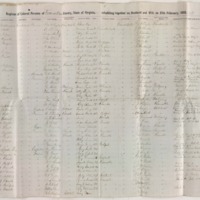
Prior to the Civil War, enslaved men and women were not legally allowed to marry. However, many enslaved couples considered themselves married, despite the lack of legal protection and recognition. Often, families were split apart by enslavers who…
President Andrew Johnson Pardons Confederate John C. Shelton, 1866

The power of the president to pardon those who commit offenses against the United States is enumerated in the Article Two of the U. S. Constitution. A presidential pardon is an executive order granting clemency for a conviction of a crime, with the…
Apprenticeship Contracts, Brunswick County, 1866

In March 1865, before the Civil War had ended, Congress created the Bureau of Refugees, Freedmen and Abandoned Lands (generally known as the Freedmen’s Bureau) to supervise matters related to freed people as well as to distribute land "abandoned" by…
Racial Violence Reported in Norfolk Newspapers, 1866
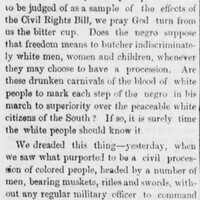
Emancipation at the end of the Civil War did not bestow citizenship or legal protections on formerly enslaved men and women. Concerned that the newly freed African Americans would not be treated equally in courts of law, Congress passed a Civil…