
Browse Items (235 total)
Governor Stanley's Address to Virginians after the Supreme Court’s Brown v. Board of Education Decision, May 17, 1954

On May 17, 1954, after nearly two decades of legal challenges against racial segregation in public schools and higher education, the United States Supreme Court ruled in Brown v. Board of Education of Topeka, Kansas that school segregation was…
Letter from Ainslee B. and Alvin R.L. Dohme, Front Royal, 1959
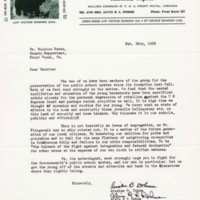
After the United States Supreme Court ruled in 1954 that school segregation was unconstitutional in the landmark case Brown v. Board of Education, Virginia's white political leaders at the state and local levels led a Massive Resistance movement,…
"The Bottle," Illustrated Panels, George Cruikshank, 1848
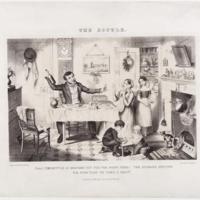
The temperance movement, or the movement to make alcohol consumption illegal, became widespread in nineteenth-century America. Since the European settlement of North America, alcohol consumption had been common. By the 1830s, Americans consumed an…
Home Rule and Local Self Government During Prohibition, 1914
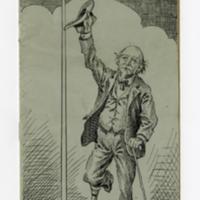
After the Civil War, the temperance movement swept the nation. Starting with Maine in 1851, states and localities around the country held referendums to let its citizens vote on whether or not to ban alcohol. In 1886, Virginia adopted the “Local…
Virginia Health Bulletin: The New Virginia Law To Preserve Racial Integrity, March 1924
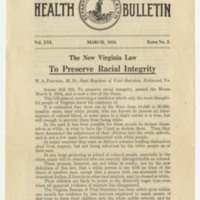
In 1924, Virginia's General Assembly passed the Racial Integrity Act, which was designed to stop the “intermixture” of white and Black people. The act banned interracial marriage by requiring marriage applicants to identify their race as "white,"…
Buck v. Bell, Supreme Court of Appeals of Virginia, Brief for Appellee, September 1925

What is known as the Progressive Movement in the United States lasted from the late 19th century until the 1940s. While many positive social reforms occurred, there were also laws enacted in which people who were thought to be “inferior” in some way…
High School Attitudes Towards Prohibition, 1930

At the turn of the twentieth century, the call for Prohibition had become a national issue, espoused by many politicians and pushed by several strong organizations. The American Temperance Society, started in 1826, acted as a support group for…
The Verdict, Anti-Saloon League Flyer, April-May 1919
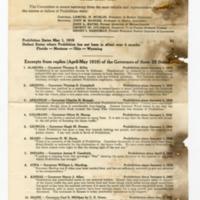
At the turn of the twentieth century, the call for the prohibition of alcohol had become a national issue, advocated by many politicians and pushed by several strong organizations. The American Temperance Society, started in 1826, acted as a support…
The Young Crusader, Woman’s Christian Temperance Magazine for Children, 1934
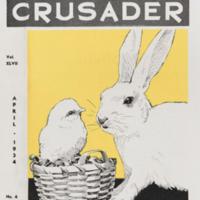
"Agitate – Educate – Legislate” was the slogan of the Woman’s Christian Temperance Union, which advocated the prohibition of alcohol. Established in 1874 in Ohio, the union became a national movement and Virginia women established a state chapter in…
Portrait of Alexander Spotswood

Alexander Spotswood served from 1710 to 1722 as lieutenant governor of Virginia, in the place of the royal governor who never came to the colony. During his tenure Spotswood sought to improve the colony's security and economy and relations with…