
Browse Items (224 total)
The Federalist Papers, Number 10, 1787
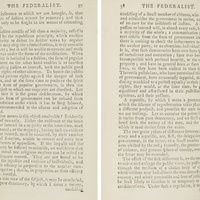
Delegates to the Constitutional Convention approved a new constitution for the United States on September 17, 1787. But before it could be adopted, nine states had to ratify the document. It had the support of some of America's brightest statesman…
The Federalist Papers, Number 51, 1788
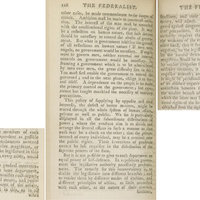
Delegates to the Constitutional Convention approved a new constitution for the United States on September 17, 1787. But before it could be adopted, nine states had to ratify the document. Despite it having the support of America's brightest statesman…
The First Vote, Engraving published in Harper's Weekly, 1867
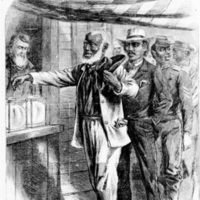
With the end of the Civil War came the end of slavery in the American South. The Thirteenth Amendment to the United States Constitution, ratified on December 9, 1865, officially outlawed slavery. Racial hostilities towards formerly enslaved men and…
The United States, Map, 1816
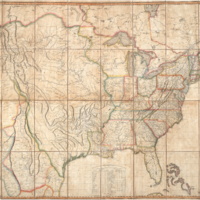
Completed in 1803, the Louisiana Purchase was a land deal between the United States and France. In it, the United States acquired approximately 827,000 square miles of land west of the Mississippi River from French emperor Napoleon Bonaparte for…
The Verdict, Anti-Saloon League Flyer, April-May 1919
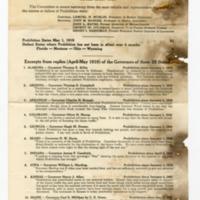
At the turn of the twentieth century, the call for the prohibition of alcohol had become a national issue, advocated by many politicians and pushed by several strong organizations. The American Temperance Society, started in 1826, acted as a support…
The Virginia Declaration of Rights (George Mason's Draft)
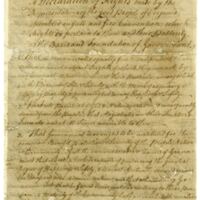
Virginia's Fifth Revolutionary Convention met at the Capitol in Williamsburg from May 6 to July 5, 1776, and declared independence from Great Britain. The delegates also voted to prepare a constitution for Virginia as well as a statement of rights.…
The Young Crusader, Woman’s Christian Temperance Magazine for Children, 1934
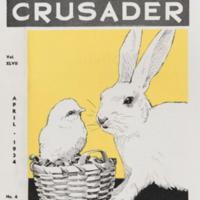
"Agitate – Educate – Legislate” was the slogan of the Woman’s Christian Temperance Union, which advocated the prohibition of alcohol. Established in 1874 in Ohio, the union became a national movement and Virginia women established a state chapter in…
This is the Enemy (No. 44), War Poster, Artists for Victory, 1943
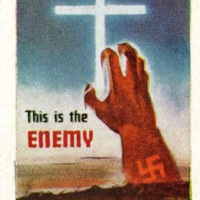
Based in New York, N.Y., 1942-1946. Artists for Victory, Inc. was a non-profit organization of more than ten thousand artists formed to assist in the war effort. Their activities included a British-American goodwill exhibition, sponsorship of…
Thomas Paine and Common Sense, Pamphlet, 1776
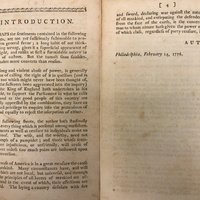
Thomas Paine (1737–1809) was the most prolific writer of pro-independence tracts during the Revolutionary War. He wrote for average Americans, so his works—notably Common Sense and The American Crisis—reached thousands of readers and convinced many…
Treaty of Middle Plantation, Signature page, 1677

English expansion into Indigenous territories led to several violent eruptions of conflict in the first decades of settlement in Virginia. A series of wars called the Anglo-Powhatan Wars ended in 1646 with the death of Opechancanough, brother of…