
Browse Items (235 total)
Confederate Parole Pass, 1865

On April 9, 1865, Confederate General Robert E. Lee surrendered the Army of Northern Virginia to General Ulysses S. Grant at Appomattox Court House. The surrender effectively ended the American Civil War in Virginia, although fighting continued in…
Copy of the Fifteenth Amendment Sent to North Carolina Legislature, 1869

After the Civil War ended and slavery was abolished in 1865, Radical Republicans in Congress became frustrated with the opposition that many white southerners exhibited to extending full rights of citizenship to African Americans. Congress proposed…
Cuban Missile Crisis—Strategic Consideration, October 1962

The Cuban Missile Crisis occurred during John F. Kennedy’s presidency. In October 1962 a United States spy plane captured evidence that the Soviet Union was moving nuclear missiles into Cuba. Located just 90 miles off the coast of Florida, Cuba had…
Declaration of Independence, 1776
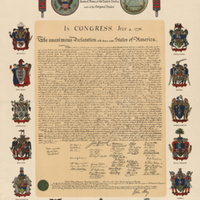
The Revolutionary War erupted with battles at Lexington and Concord and at Bunker Hill in 1775, but throughout the following year many colonists continued to believe reconciliation with Great Britain was possible. Some members of the Continental…
Diploma from Tobacco Exposition, 1888

Tobacco production has dominated Virginia commerce for more than four centuries. From the colonial period, producers created brands that made their products distinguishable from others. Early tobacco art usually took the form of the planters' brand…
Distribution of Virginia's Slave Population, Map, 1861

Using the data from the 1860 census, this map was created in 1861. It shows the distribution of enslaved Virginians in each of the state's counties, with the darker shades showing the counties with the highest percentage of enslaved men, women, and…
Don't Go Back and Backward with Republicans, Broadside, 1936

In 1932, Franklin D. Roosevelt won the presidential election, making him the first Democratic president in twelve years. As President, Roosevelt took quick action through his New Deal initiative to provide relief for struggling Americans through a…
Drawing of Shellfield, Westmoreland Co., Edward A. Darby, 1932-37
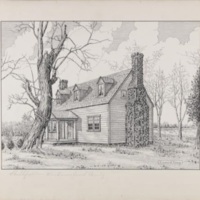
In the 1930s, the Virginia State Commission on Conservation and Development’s Division of History and Archaeology received funds from the Works Progress Administration’s (later known as the Work Projects Administration) Federal Art Project to…
Edmund Bradford Seeks a Pardon, 1865

The power of the president to pardon those who commit offenses against the United States is enumerated in the Article Two of the U. S. Constitution. A presidential pardon is an executive order granting clemency for a conviction of a crime, with the…
Equal Rights Amendment, Ratification Demonstrations, 1970s
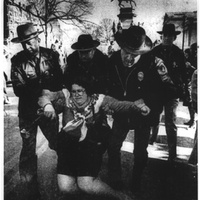
The battle to ratify the Equal Rights Amendment (ERA) was a key component of the women’s rights movement in the 1970s. The amendment, first proposed in 1923, said “Equality of rights under the law shall not be denied or abridged by the United States…