
Browse Items (224 total)
War of 1812 Caricatures
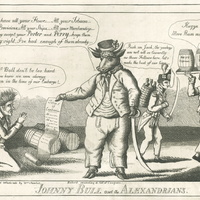
After the American Revolution, relations between the United States and Great Britain remained strained. In its long war with France, Britain imposed a blockade on neutral countries, including the United States, that disrupted shipping and trade.…
The United States, Map, 1816
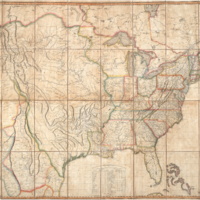
Completed in 1803, the Louisiana Purchase was a land deal between the United States and France. In it, the United States acquired approximately 827,000 square miles of land west of the Mississippi River from French emperor Napoleon Bonaparte for…
Rep. James Barbour, Slavery in Missouri, Speech, 1820
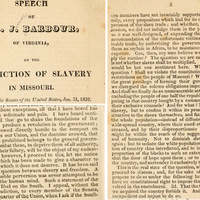
The Missouri Compromise of 1820 represented an uneasy agreement that temporarily preserved the peace between leaders in pro-slavery and in free states. Although it resolved the controversy over Missouri’s entrance to the United States, it signaled…
Phillis, Commonwealth Cause, Accomack County, 1824
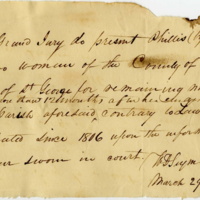
Commonwealth causes are criminal cases filed by a county's prosecuting attorney (commonwealth's attorney) against individuals who violate Virginia law. Prior to the abolition of slavery in Virginia in 1865, criminal offenders and victims included…
Portrait of Thomas Jefferson, 1827
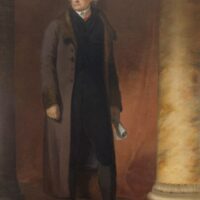
Thomas Jefferson (1743–1826) was born at Shadwell, along the Rivanna River in what is now Albemarle County. When his father died, the fourteen-year-old Jefferson inherited more than 5,000 acres of land, about twenty enslaved laborers, and his…
A Narrative on Nat Turner’s Revolt, Samuel Warner, 1831

Nat Turner was born enslaved in Southampton County, Virginia, in 1800. He became a preacher and self-proclaimed prophet who believed that he had been called to lead a rebellion against slavery. On August 21, 1831, Turner began a slave revolt that…
Portrait of Black Hawk, 1833
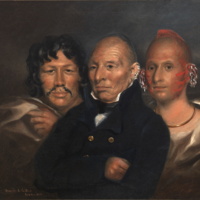
Black Hawk, born in 1767 and known in his native language as Makataimeshekiakiak, was a Sauk warrior and tribal leader. The Sauk lived on the Rock River, a tributary of the Mississippi, in what is now Illinois, and fought against the United States…
William Albright, Runaway Slave Record, Kanawha County, 1834
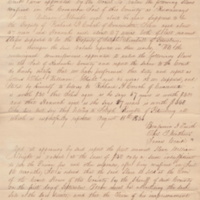
Virginia's economy was based on slavery until the Civil War and emancipation. In 1860, Virginia was home to 500,000 enslaved people, more than any other state. Although most Virginians were not enslavers, farmers and planters used enslaved laborers…
American Anti-Slavery Society, Broadside, 1836
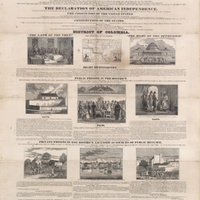
In December 1833, a group of about sixty Black and white men met in Philadelphia and organized the American Anti-Slavery Society to seek the immediate emancipation of enslaved people. The Society viewed slavery as a violation of the principle of…
Jerry Armstrong, Registration of Free Status, 1840
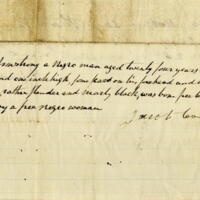
Before the end of slavery, free Black Virginians found their liberty in constant jeopardy because they were not considered citizens. After Gabriel's attempted slave rebellion in 1800, the General Assembly passed an act in 1801 requiring county…