
Browse Items (232 total)
The Federalist Papers, Number 10, 1787
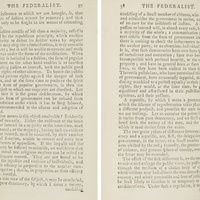
Delegates to the Constitutional Convention approved a new constitution for the United States on September 17, 1787. But before it could be adopted, nine states had to ratify the document. It had the support of some of America's brightest statesman…
Treaty of Middle Plantation, Signature page, 1677

English expansion into Indigenous territories led to several violent eruptions of conflict in the first decades of settlement in Virginia. A series of wars called the Anglo-Powhatan Wars ended in 1646 with the death of Opechancanough, brother of…
Cockacoeske, Frontlet from King Charles II, 1677
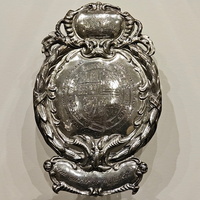
Cockacoeske was a significant figure in the history of the Pamunkey tribe in Virginia. She was a descendant of Opechancanough, the brother of Powhatan, who had been the paramount chief of the Powhatan Confederacy. Cockacoeske became weroansqua, or…
Abraham Skipwith, Petition for Freedom, 1785
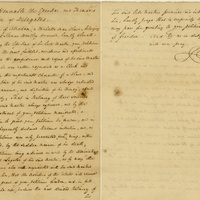
Abraham Skipwith was the first Black man documented as a property owner in Richmond’s historic Jackson Ward district. Skipwith became a wealthy landowner after emancipating himself in the years following the American Revolution. His story illustrates…
Tuskegee Airmen in World War II, Photographs, ca. 1943
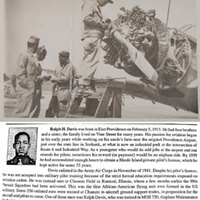
During World War II, Black Americans took the opportunity to point out the hypocrisy of engaging in a war effort to save democracy abroad while maintaining segregation laws at home. Spurred by the national newspaper, Chicago Defender, the Black…
Battle of Great Bridge, William Woodford Letter, 1775
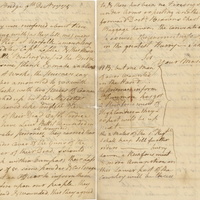
The Battle of Great Bridge, fought in December 1775, was Virginia’s first large-scale battle in the American Revolution. The Virginia militia fought against British regular troops and Loyalist militia that included a unit of Black soldiers. The…
Give Me Liberty or Give Me Death, Patrick Henry Speech, 1775
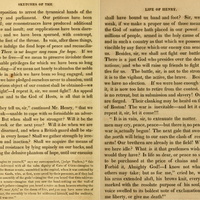
In March 1775, the American colonies appeared to be on a path to war with Britain. Tensions increased over British treatment of Bostonians after Parliament passed the Coercive Acts (also known as the Intolerable Acts) in 1774. In Virginia, Governor…
Monacan Education and the Pupil Placement Board, Amherst County, 1963
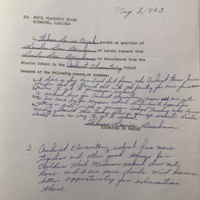
After the U.S. Supreme Court ruled in Brown v. Board of Education (1954) that racial segregation in public schools was unconstitutional, Virginia resisted desegregating its schools for years. One tactic was the creation of a state Pupil Placement…
Virginia Superintendent of Public Instruction Report, Teacher Census Excerpt, 1930
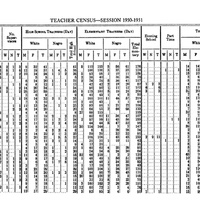
The legislation authorizing Virginia’s first statewide public school system in 1870 required that schools be racially segregated. The U.S. Supreme Court’s decision in Plessy v. Ferguson (1896) upheld southern segregation laws as long as facilities…
Segregated Schools in Amelia County, Newspaper articles
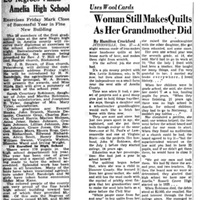
Virginia did not have a statewide system of public schools until after the Civil War. Before this, private academies and common schools were all that existed, but the Virginia General Assembly did authorize a “literary fund” that supplied counties…