
Browse Items (232 total)
Thomas Paine and Common Sense, Pamphlet, 1776
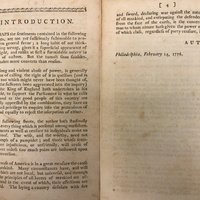
Thomas Paine (1737–1809) was the most prolific writer of pro-independence tracts during the Revolutionary War. He wrote for average Americans, so his works—notably Common Sense and The American Crisis—reached thousands of readers and convinced many…
Act to Remove the Seat of Government to Richmond, 1779
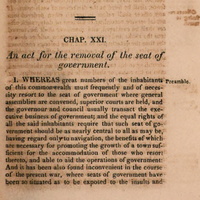
Virginia has had three capitals since the English settlers first organized the colony's government. The first capital was located at Jamestown until 1699, when the House of Burgesses passed a resolution moving it to Williamsburg. In 1779, the General…
Virginia Constitution of 1776
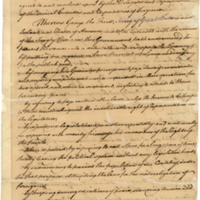
The last of Virginia's Revolutionary Conventions met from early May through July 5, 1776, to establish a new government for the independent Commonwealth of Virginia. In this session, the delegates unanimously passed the Virginia Declaration of Rights…
Declaration of Independence, 1776
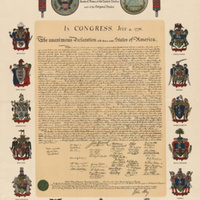
The Revolutionary War erupted with battles at Lexington and Concord and at Bunker Hill in 1775, but throughout the following year many colonists continued to believe reconciliation with Great Britain was possible. Some members of the Continental…
Address to the Ladies, Poem, 1767
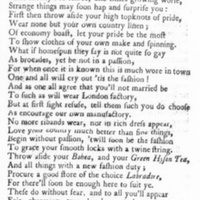
During the 1760s, many Americans came to believe that the British government was imposing unfair taxes on goods coming into the colonies. Parliament levied its first direct tax on the colonists in 1764 to help pay for the costs of fighting the Seven…
Call for a Convention to Meet in Williamsburg, 1774
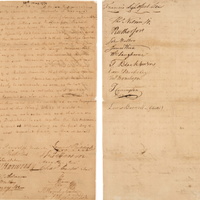
The Sons of Liberty threw hundreds of tea chests into Boston harbor in December 1773 to protest the passage of the Townshend Acts, which taxed a number of goods, including tea. The next year, Parliament responded to this destruction of about $1.7…
Proclamation Against Patrick Henry, 1775
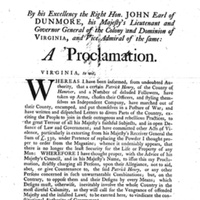
Patrick Henry (1736–1799) could be considered Virginia’s most outspoken revolutionary. Born in Hanover County, Henry studied law on his own and was admitted to the bar in 1760. In 1763, he spoke out against the action of the king's Privy Council,…
Requisition Order to Washington County Slaveholders, Abingdon Virginian, Feb. 20, 1863
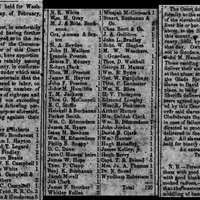
From the beginning of the Civil War, the Confederate government attempted to requisition needed goods and services from private citizens. In March 1863, the Confederate Congress passed an Impressment Act that allowed them to requisition crops,…
William Mahone Writes About Election Fraud, Letter, 1885
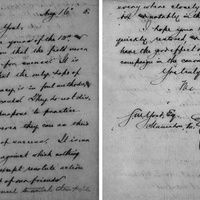
After the Civil War and the enfranchisement of Black men, political contests in Virginia were often heated. In 1879, a biracial coalition known as the Readjuster Party won control of the General Assembly and two years later won the governor’s race,…
Mapping Attitudes About Secession, 1861
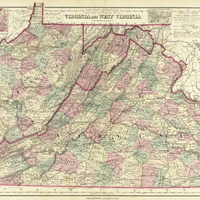
During the secession crisis of 1860–1861, attitudes about leaving the United States varied widely throughout Virginia. While the majority of white men supported the secession referendum that was approved in a vote on May 23, 1861, many white…