
Browse Items (235 total)
Madison Mining and Trading Company, Petition, 1849

In 1848, Spain ceded a vast western territory to the United States as part of the Treaty of Hidalgo that ended the Mexican-American War. This included California, home to about 6,500 Californios of Mexican descent, 700 Americans, and 150,000…
Henry Box Brown and his Anti-Slavery Panorama, 1851

Henry Box Brown gained fame after escaping slavery in Richmond in 1849. Although many others self-emancipated to freedom, Brown is the only person documented to have shipped himself to freedom. He used his fame to speak out against slavery as a…
Virginia Springs - Summer Arrangement, Broadside, 1855

Western Virginia's mineral-spring resorts were extremely popular in the 19th century. Travelers from throughout the United States, especially from the southern region, visited the resorts. There people would drink or bathe in the spring water, which…
John Brown, Portrait, 1859

In October 1859, abolitionist John Brown and a small group of white and Black men slipped across the border between Maryland and Virginia (now West Virginia) with a plan to occupy the federal arsenal, armory, and rifle factory at Harper's Ferry.…
Hiram Bartee, Indictment for Abolitionism, Scott County, 1859

In October 1859, white abolitionist John Brown led an armed raid on the federal arsenal at Harper's Ferry, Virginia (now West Virginia), in an attempt to overthrow the system of slavery. Sixteen people died in the raid. Brown and six of his…
Distribution of Virginia's Slave Population, Map, 1861

Using the data from the 1860 census, this map was created in 1861. It shows the distribution of enslaved Virginians in each of the state's counties, with the darker shades showing the counties with the highest percentage of enslaved men, women, and…
Mapping Attitudes About Secession, 1861
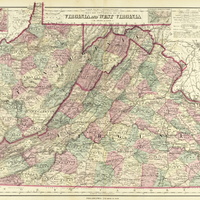
During the secession crisis of 1860–1861, attitudes about leaving the United States varied widely throughout Virginia. While the majority of white men supported the secession referendum that was approved in a vote on May 23, 1861, many white…
Letter from a Confederate Soldier, 1862

Virginia was a critical battleground during the Civil War. Not only was Richmond the seat of the Confederate government, but the Commonwealth was also the site of some of the war’s major battles. Tens of thousands of Virginians fought in the Civil…
“Master Abraham Lincoln Gets a New Toy,” Political Cartoon, 1863

Illustrated periodicals like Harper's Weekly were popular with Americans in the middle of the 19th century. After southern states formed the Confederate States of America, residents there could not easily receive newspapers and magazines printed in…
Requisition Order to Washington County Slaveholders, Abingdon Virginian, Feb. 20, 1863
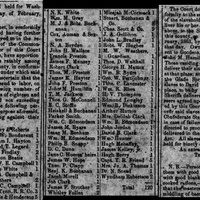
From the beginning of the Civil War, the Confederate government attempted to requisition needed goods and services from private citizens. In March 1863, the Confederate Congress passed an Impressment Act that allowed them to requisition crops,…