
Browse Items (235 total)
Hiram Bartee, Indictment for Abolitionism, Scott County, 1859

In October 1859, white abolitionist John Brown led an armed raid on the federal arsenal at Harper's Ferry, Virginia (now West Virginia), in an attempt to overthrow the system of slavery. Sixteen people died in the raid. Brown and six of his…
Home Rule and Local Self Government During Prohibition, 1914
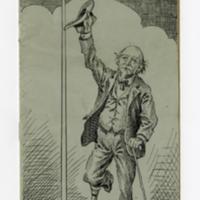
After the Civil War, the temperance movement swept the nation. Starting with Maine in 1851, states and localities around the country held referendums to let its citizens vote on whether or not to ban alcohol. In 1886, Virginia adopted the “Local…
Honor Dr. King, Broadside, 1970

Despite the ratification of both the Fifteenth and Nineteenth Amendments that granted all adult citizens in the United States the right to vote, many eligible Black voters in southern states were systematically blocked from participating in the…
Hurricane Recovery in Tidewater Virginia: A Partial Report on Red Cross Relief and Rehabilitation in the Area Damaged by Wind and Tidal Wave, 1933

The Atlantic hurricane season officially begins on June 1 and ends November 30, with the season’s peak occurring between August and October. During the very active hurricane season of 1933, the Chesapeake-Potomac Hurricane hit coastal Virginia on…
I fought for Virginia — Now it's your turn! Join the Lee Navy Volunteers, World War II Poster, 1942
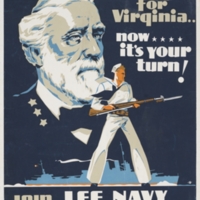
The United States produced many posters exhorting people to join the armed forces during World War II, as the need for soldiers, sailors, and pilots was critical. Often, the Office of War Information designed and circulated these posters, which were…
Inhabitants of Fauquier County, Petition Against Taxes to Support the Church, 1785

Petitions to the General Assembly were the primary catalyst for legislation in the Commonwealth from 1776 until 1865. Public improvements, military claims, divorce, freeing of enslaved people, incorporation of towns, and religious freedom were just…
Interposition and Massive Resistance, 1955
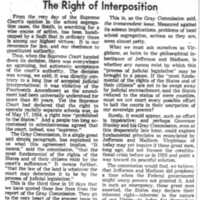
When the United States Supreme Court issued its ruling on May 17, 1954, in Brown v. Board of Education of Topeka, Kansas, it declared that racial segregation in schools was unconstitutional. The ruling overturned the “separate but equal” doctrine…
Invitation to the formal opening of the Jamestown Tercentennial Exposition, 1907
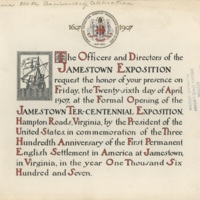
Late in the 19th century, some Virginians became interested in preserving historic buildings and landscapes that documented the state's illustrious past. White women led the effort to establish the Association for the Preservation of Virginia…
J. Lindsay Almond School Integration Speech, January 20, 1959
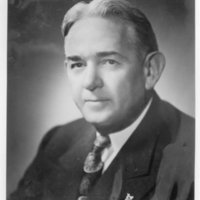
On May 17, 1954, after nearly two decades of legal challenges against racial segregation in public schools and higher education, the United States Supreme Court ruled in Brown v. Board of Education of Topeka, Kansas that school segregation was…
Jack Jouett's Ride, 1781

During the American Revolution, many ordinary people took extraordinary actions in defiance of the British government. From Paul Revere’s ride to warn Massachusetts residents about British troops on the move to Kate Barry’s trek through the South…