
Browse Items (224 total)
John L. Wilkes of Bedford County, Personal War Service Record Photograph, 1944
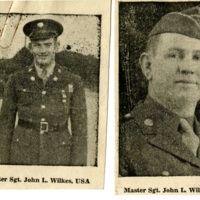
On June 6, 1944, soldiers of the Allied Expeditionary Force stormed the beaches of Normandy as part of Operation Overlord, often referred to as D-Day. Approximately 156,000 American, British and Canadian forces landed on five beaches along a 50-mile…
John Smith, Bust, circa 1905
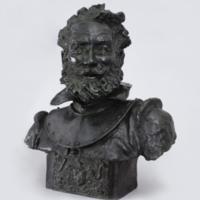
In 1906, Robert Baden-Powell presented this bust of John Smith to the Commonwealth of Virginia. Although best known as the founder of the Boy Scout movement, Baden-Powell was also an artist of considerable skill. The family of Baden-Powell's mother…
Joshua Fry and Peter Jefferson, A Map of the Most Inhabited Part of Virginia, 1755
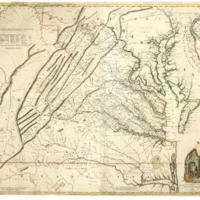
The Fry-Jefferson map was first published in 1753. It was, at the time, the most comprehensive map of 18th century Virginia. Joshua Fry and Peter Jefferson were two of the most successful surveyors in the Virginia colony. They collaborated and…
King James I, His Counterblast to Tobacco, 1604
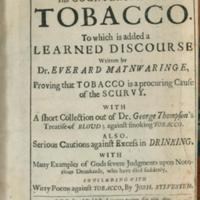
James I (1566–1625) was the king of Great Britain from 1603 until his death in 1625. The first English ruler from the House of Stuart, he succeeded Queen Elizabeth I after her death. He was the first British monarch to rule both England and…
Ku Klux Klan, Broadsides, 1966 and 1967
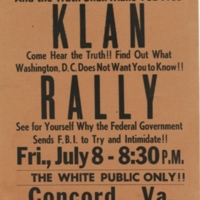
The Ku Klux Klan (KKK), or the Klan, is an extremist organization that promotes white supremacy and “100 percent Americanism.” The Klan experienced three distinct periods of power in the United States: during Reconstruction (1865–1870s), between the…
League of Women Voters Poster, 1920
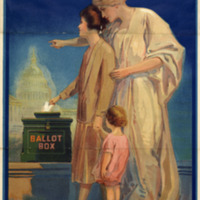
At the National American Woman Suffrage Association convention in 1919, President Carrie Chapman Catt proposed the creation of a “league of women voters to finish the fight and aid in the reconstruction of the nation.” Even before the ratification in…
Legislature of Virginia, Photograph, 1871
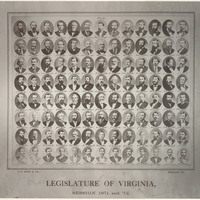
The end of the Civil War and the abolition of slavery in 1865 led to important changes in American politics, especially in the former slave states. The most dramatic were changes to state constitutions and the ratification of the Fifteenth Amendment…
Lesson Plan - Woman Suffrage Movement in Virginia

The American woman suffrage movement is traditionally dated to the first women's rights convention held in Seneca Falls, New York, in 1848, where Elizabeth Cady Stanton, Lucretia Mott, and others called for women's equality in the home, education,…
Lesson Plan – Citizenship During and After the Reconstruction Era

Black Americans understood the meaning of citizenship and the possibilities afforded by the prospect of emancipation long before the end of the Civil War. Among their demands for equality was the right to participate in the political process as…
Lesson Plan – School Desegregation and the Voices Not Heard, 1956

In 1896 the United States Supreme Court ruled in Plessy v. Ferguson that racial segregation did not violate the "equal protection of the laws" clause of the Fourteenth Amendment. Virginia and other southern states employed the doctrine of "separate…