
Browse Items (235 total)
League of Women Voters Poster, 1920
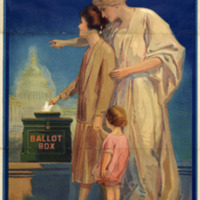
At the National American Woman Suffrage Association convention in 1919, President Carrie Chapman Catt proposed the creation of a “league of women voters to finish the fight and aid in the reconstruction of the nation.” Even before the ratification in…
Legislature of Virginia, Photograph, 1871
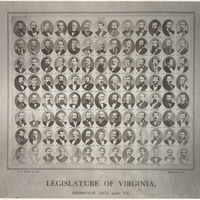
The end of the Civil War and the abolition of slavery in 1865 led to important changes in American politics, especially in the former slave states. The most dramatic were changes to state constitutions and the ratification of the Fifteenth Amendment…
Lesson Plan - Cold War Politics and Culture in the 20th Century United States

After the Soviet Union launched a test nuclear missile in 1949, the "Cold War" between the U.S. and U.S.S.R. intensified. As each superpower stockpiled more nuclear weapons, the United States fashioned scenarios about what might happen if the…
Lesson Plan - Indigenous and English Relations in 17th Century Virginia

The period of first contact between Indigenous people and English colonists in 1607 until the end of Bacon’s Rebellion can be described as a time featuring periods of intermittent uneasy coexistence and warfare. When Captain John Smith explored the…
Lesson Plan - Mapping Revolutionary War Turning Points in Virginia

In the eighteenth century, Virginia's location on the mid-Atlantic seaboard was a key point along colonial trade routes, communication corridors, and military supply lines. Virginia also boasted natural harbors and successful ports in the areas of…
Lesson Plan - Woman Suffrage Movement in Virginia

The American woman suffrage movement is traditionally dated to the first women's rights convention held in Seneca Falls, New York, in 1848, where Elizabeth Cady Stanton, Lucretia Mott, and others called for women's equality in the home, education,…
Lesson Plan – Citizenship During and After the Reconstruction Era

Black Americans understood the meaning of citizenship and the possibilities afforded by the prospect of emancipation long before the end of the Civil War. Among their demands for equality was the right to participate in the political process as…
Lesson Plan – School Desegregation and the Voices Not Heard, 1956

In 1896 the United States Supreme Court ruled in Plessy v. Ferguson that racial segregation did not violate the "equal protection of the laws" clause of the Fourteenth Amendment. Virginia and other southern states employed the doctrine of "separate…
Lesson Plan – Urban Renewal in Virginia

In the second half of the twentieth century, many U.S. cities undertook a series of “urban redevelopment” projects with federal funds that leaders claimed would modernize and upgrade their cities’ infrastructure. These urban renewal projects often…
Lesson Plan – Virginia's Coal Industry, 19th and 20th Centuries

Historically, coal has been one of Virginia’s most valuable natural resources. The first coal mines were developed after deposits were discovered early in the 1700s in Chesterfield County. Although Chesterfield exported the most coal before the Civil…