
Browse Items (235 total)
A Proclamation Concerning Tobacco, 1630

After John Rolfe's successful experimentation with the West Indies tobacco plant, Nicotaiana tabacum, the Virginia Company of London realized that it had found a profitable product to export from the colony. Tobacco cultivation spread widely through…
Portrait of Sir William Berkeley

William Berkeley (1605–1677) was the longest-serving royal governor of Virginia. He served as a Crown governor (an appointee of the King) between 1642 until 1652 and again from 1660 until his death in 1677. In his late twenties, Berkeley was a part…
Letter from Carl E. Auvil to Governor Thomas B. Stanley, November 15, 1954

After the United States Supreme Court ruled in 1954 that school segregation was unconstitutional in the landmark case Brown v. Board of Education, Virginia's white political leaders at the state and local levels led a Massive Resistance movement,…
Letter from Eliza E. Fitch of Charlottesville to Governor Thomas B. Stanley, June 26, 1954

On May 17, 1954, after nearly two decades of legal challenges against racial segregation in public schools and higher education, the United States Supreme Court ruled in Brown v. Board of Education of Topeka, Kansas that school segregation was…
Petition from Students at Lane High School to Reopen Schools, Charlottesville, September 1958

On May 17, 1954, after nearly two decades of legal challenges against racial segregation in public schools and higher education, the United States Supreme Court ruled in Brown v. Board of Education of Topeka, Kansas that school segregation was…
Letter from Baptist Ministers Conference to Governor James Lindsay Almond, January 19, 1960
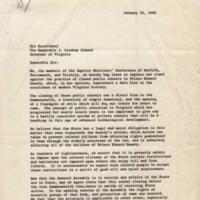
On May 17, 1954, after nearly two decades of legal challenges against racial segregation in public schools and higher education, the United States Supreme Court ruled in Brown v. Board of Education of Topeka that school segregation was…
J. Lindsay Almond School Integration Speech, January 20, 1959
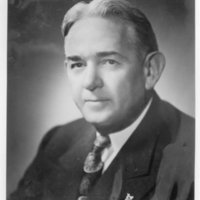
On May 17, 1954, after nearly two decades of legal challenges against racial segregation in public schools and higher education, the United States Supreme Court ruled in Brown v. Board of Education of Topeka, Kansas that school segregation was…
Pamunkey Schoolhouse Photograph, May 31, 1937
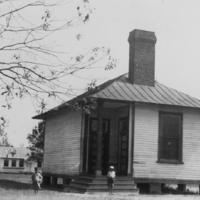
Indigenous peoples, including Virginia Indian tribes, were not considered American citizens even after ratification of the Fourteenth Amendment. Between 1880 and 1920, many tribes established their own schools, as Black citizens did, likely for…
Robert Kennedy, Visit to Prince Edward County Schools, May 11, 1964
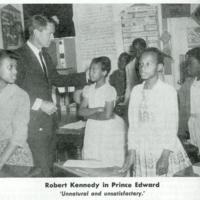
On May 17, 1954, after nearly two decades of legal challenges against racial segregation in public schools and higher education, the United States Supreme Court ruled in Brown v. Board of Education of Topeka that school segregation was…
Interposition and Massive Resistance, 1955
When the United States Supreme Court issued its ruling on May 17, 1954, in Brown v. Board of Education of Topeka, Kansas, it declared that racial segregation in schools was unconstitutional. The ruling overturned the “separate but equal” doctrine…