
Browse Items (235 total)
Phillis, Commonwealth Cause, Accomack County, 1824
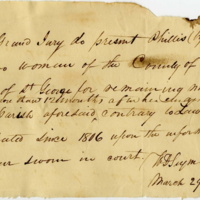
Commonwealth causes are criminal cases filed by a county's prosecuting attorney (commonwealth's attorney) against individuals who violate Virginia law. Prior to the abolition of slavery in Virginia in 1865, criminal offenders and victims included…
William Albright, Runaway Slave Record, Kanawha County, 1834
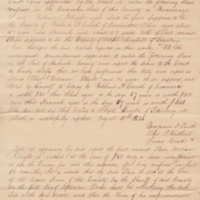
Virginia's economy was based on slavery until the Civil War and emancipation. In 1860, Virginia was home to 500,000 enslaved people, more than any other state. Although most Virginians were not enslavers, farmers and planters used enslaved laborers…
James S. Russell and St. Paul Normal and Industrial Institute, Broadside, 1895

This broadside advertises an excursion by train from Lawrenceville to Norfolk as a fundraiser for St. Paul Normal and Industrial Institute. James Solomon Russell (1857–1935) founded St. Paul Normal and Industrial School in Lawrenceville to serve the…
Apprenticeship Contracts, Brunswick County, 1866

In March 1865, before the Civil War had ended, Congress created the Bureau of Refugees, Freedmen and Abandoned Lands (generally known as the Freedmen’s Bureau) to supervise matters related to freed people as well as to distribute land "abandoned" by…
Lesson Plan – Urban Renewal in Virginia
In the second half of the twentieth century, many U.S. cities undertook a series of “urban redevelopment” projects with federal funds that leaders claimed would modernize and upgrade their cities’ infrastructure. These urban renewal projects often…
Benjamin Tonsler, Black Educator and Community Leader, Obituary, 1917

After the Civil War, Black Virginians faced both opportunities and challenges. State law segregated public schools. As a result, a class of Black educators emerged to become leaders not only of their schools, but also of their communities whose…
Racial Violence Reported in Norfolk Newspapers, 1866
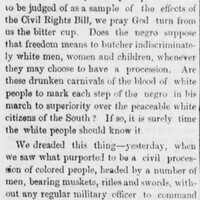
Emancipation at the end of the Civil War did not bestow citizenship or legal protections on formerly enslaved men and women. Concerned that the newly freed African Americans would not be treated equally in courts of law, Congress passed a Civil…
Equal Suffrage Address, Norfolk, 1865

Even before the end of the Civil War, newly freed Black people called on the government to grant them equal suffrage (the right to vote). A committee of Black residents in Norfolk made this demand in June 1865, shortly after the war ended. Norfolk’s…
Pamunkey Employment, Petition, 1711
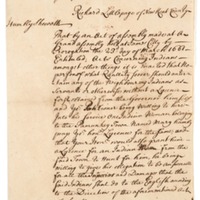
Relations between Virgina's Indigenous peoples and the colonists who wanted to settle on their land were often contentious and violent. Virginia's colonial government passed multiple laws in the 17th century to regulate the actions of settlers and…
Letter from Lt. Gov. Alexander Spotswood About Educating Indians, 1711

The Brafferton School was one of several colonial “Indian Schools” intended to Christianize and educate Indigenous men and boys in a western scholastic tradition. It was part of a larger effort by Europeans to westernize and Christianize the…