
Browse Items (235 total)
Proclamation Against Patrick Henry, 1775
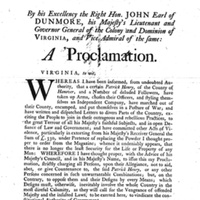
Patrick Henry (1736–1799) could be considered Virginia’s most outspoken revolutionary. Born in Hanover County, Henry studied law on his own and was admitted to the bar in 1760. In 1763, he spoke out against the action of the king's Privy Council,…
Give Me Liberty or Give Me Death, Patrick Henry Speech, 1775
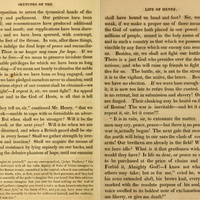
In March 1775, the American colonies appeared to be on a path to war with Britain. Tensions increased over British treatment of Bostonians after Parliament passed the Coercive Acts (also known as the Intolerable Acts) in 1774. In Virginia, Governor…
Battle of Great Bridge, William Woodford Letter, 1775
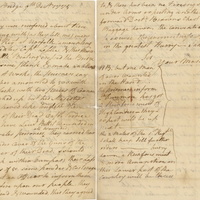
The Battle of Great Bridge, fought in December 1775, was Virginia’s first large-scale battle in the American Revolution. The Virginia militia fought against British regular troops and Loyalist militia that included a unit of Black soldiers. The…
Lesson Plan - Mapping Revolutionary War Turning Points in Virginia

In the eighteenth century, Virginia's location on the mid-Atlantic seaboard was a key point along colonial trade routes, communication corridors, and military supply lines. Virginia also boasted natural harbors and successful ports in the areas of…
The Virginia Declaration of Rights (George Mason's 1778 Draft)
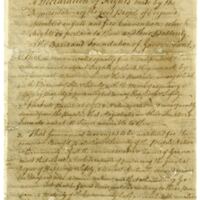
Virginia's Fifth Revolutionary Convention met at the Capitol in Williamsburg from May 6 to July 5, 1776, and declared independence from Great Britain. The delegates also voted to prepare a constitution for Virginia as well as a statement of rights.…
Final Meeting of the House of Burgesses, 1776

Virginia's General Assembly first met in July–August 1619. At that time twenty-two burgesses representing eleven settlements assembled in Jamestown with the royal governor and his councilors, or advisors. They approved legislation related to tobacco…
Mary Webley, Petition to the General Assembly, 1776

After the Battle of Great Bridge on December 9, 1775, Lord Dunmore and his fleet abandoned the city of Norfolk. Patriot soldiers from North Carolina and Virginia took control of the city. They refused to provide food and supplies to the British…
Petition of 10,000 Dissenters for Religious Freedom, 1776
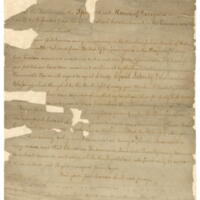
With the establishment of the Virginia colony in 1607, the Church of England (Anglican) was the only religious denomination recognized by the government for more than 250 years. Anyone not worshipping with the recognized church was labeled a…
Declaration of Independence, 1776
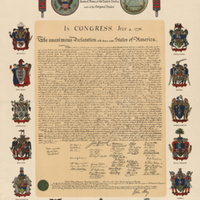
The Revolutionary War erupted with battles at Lexington and Concord and at Bunker Hill in 1775, but throughout the following year many colonists continued to believe reconciliation with Great Britain was possible. Some members of the Continental…
Virginia Constitution of 1776
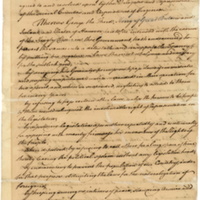
The last of Virginia's Revolutionary Conventions met from early May through July 5, 1776, to establish a new government for the independent Commonwealth of Virginia. In this session, the delegates unanimously passed the Virginia Declaration of Rights…