
Browse Items (235 total)
Thomas Paine and Common Sense, Pamphlet, 1776
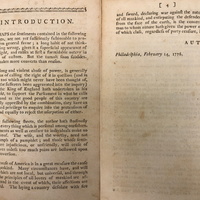
Thomas Paine (1737–1809) was the most prolific writer of pro-independence tracts during the Revolutionary War. He wrote for average Americans, so his works—notably Common Sense and The American Crisis—reached thousands of readers and convinced many…
Molly Pitcher at the 1778 Battle of Monmouth, Engraving (1859)
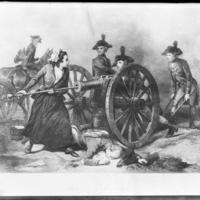
Women served in many capacities during the American Revolution. Thousands of women traveled with their husbands when they served in the Continental Army. Known as "camp followers," they marched with the supply wagons, set up camps nearby. These women…
Act to Remove the Seat of Government to Richmond, 1779
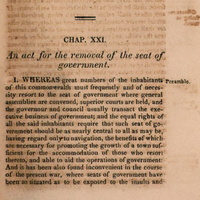
Virginia has had three capitals since the English settlers first organized the colony's government. The first capital was located at Jamestown until 1699, when the House of Burgesses passed a resolution moving it to Williamsburg. In 1779, the General…
Arthur Campbell, Letter to the Governor About Militia Attacks Against Indians, 1781

The American Revolution was not only fought along the eastern seabord between the Continental Army and patriot militia and the British troops and their loyalist militia allies. An equally fierce battle raged in the Appalachian mountains between the…
A Petition on Behalf of an Enslaved Person Accused of Treason, 1781

By 1775 more than half a million Black Americans, most of them enslaved, were living in the thirteen colonies. Thousands participated in the American Revolution. They often gave their loyalty to the side which offered the best path to freedom from…
Siege at Yorktown, Map, 1781
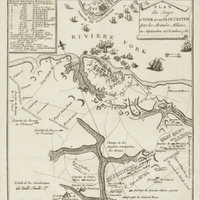
By 1780, the Continental Army had been battling British forces for five years during the American Revolution. Although the Americans had secured some key victories in places as far-flung as New York and South Carolina, the British still held…
Jack Jouett's Ride, 1781

During the American Revolution, many ordinary people took extraordinary actions in defiance of the British government. From Paul Revere’s ride to warn Massachusetts residents about British troops on the move to Kate Barry’s trek through the South…
An Act Freeing Enslaved People Who Served as Soldiers, 1783

By 1775, approximately half a million enslaved Americans were living in the thirteen colonies. Thousands of Black Americans participated in the American Revolution. Some joined the British while others fought with the Americans, depending on whom…
Inhabitants of Fauquier County, Petition Against Taxes to Support the Church, 1785

Petitions to the General Assembly were the primary catalyst for legislation in the Commonwealth from 1776 until 1865. Public improvements, military claims, divorce, freeing of enslaved people, incorporation of towns, and religious freedom were just…
An Act to Naturalize the Marquis de Lafayette, General Assembly of Virginia, 1785
The Marquis de Lafayette (1757–1834) was a French aristocrat whose family fortune ranked him among the wealthiest in France, but he was also one of America’s best-known Revolutionary heroes. Gilbert de Motier de Lafayette inherited his title at the…