
Browse Items (44 total)
World War I African American Recruitment Poster
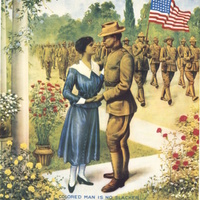
On April 2, 1917, after pledging to keep the country out of the European conflict, President Woodrow Wilson stood before Congress and issued a declaration of war against Germany. "The world must be made safe for democracy," he stated, framing the war…
War Gardens Victorious, World War I Poster, 1919
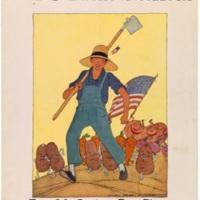
As Americans prepared to send soldiers overseas during the First World War, the government reorganized the economy to better supply and equip its troops. Peacetime industries shifted towards producing necessary military goods like uniforms and…
I fought for Virginia — Now it's your turn! Join the Lee Navy Volunteers, World War II Poster, 1942
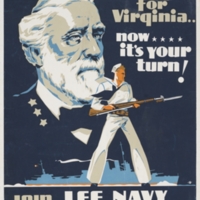
The United States produced many posters exhorting people to join the armed forces during World War II, as the need for soldiers, sailors, and pilots was critical. Often, the Office of War Information designed and circulated these posters, which were…
Remember Dec. 7th!, World War II Poster, 1942
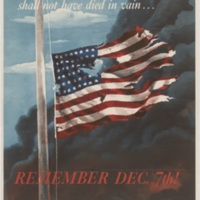
From September 1939 to December 1941, the United States was not officially at war with any of the Axis powers. While the government provided to the Allies through programs such as Lend-Lease, Americans generally held a strong isolationist sentiment…
Can all you can. It's a real war job! WWII Poster, 1943

During World War II, the American government asked civilians to participate in the war effort. A common way for the government to communicate with civilians was through posters hung in public places. Inspirational, informative, and instructive, the…
This is the Enemy (No. 44), War Poster, Artists for Victory, 1943
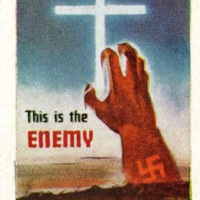
Based in New York, N.Y., 1942-1946. Artists for Victory, Inc. was a non-profit organization of more than ten thousand artists formed to assist in the war effort. Their activities included a British-American goodwill exhibition, sponsorship of…
Tuskegee Airmen in World War II, Photographs, ca. 1943
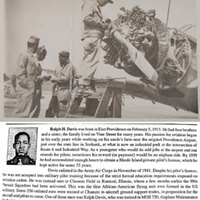
During World War II, Black Americans took the opportunity to point out the hypocrisy of engaging in a war effort to save democracy abroad while maintaining segregation laws at home. Spurred by the national newspaper, Chicago Defender, the Black…
2d Lt. Alice C. Thompson, L-201903, Photograph, 1944
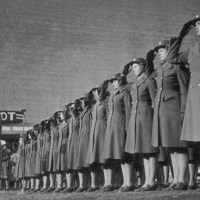
During World War II, the United States Army established a unit that enabled women to fill non-combat roles. Prior to the creation of this unit women mostly served as nurses supporting combat troops. In May 1941, Rep. Edith Nourse Rogers of…
View of Girls Processing a Hydraulic Bridge Erecting Crane, Hampton Roads Port of Embarkation, U.S. Army Signal Corps Photograph, 1944
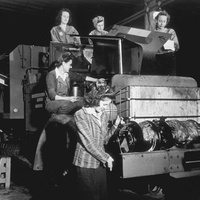
World War II fundamentally altered the workforce of the United States as the nation shifted from a peacetime consumer-focused economy to one centered on war production. While industries shifted their production lines to munitions and supplies for the…
John L. Wilkes of Bedford County, Personal War Service Record Photograph, 1944
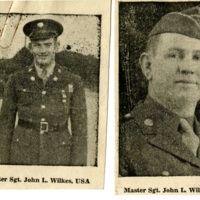
On June 6, 1944, soldiers of the Allied Expeditionary Force stormed the beaches of Normandy as part of Operation Overlord, often referred to as D-Day. Approximately 156,000 American, British and Canadian forces landed on five beaches along a 50-mile…