
Browse Items (235 total)
Twelve Reasons Why Mothers Should Have the Vote, Equal Suffrage League Flyer, 1910's
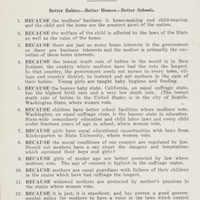
Founded in 1909, Virginia's Equal Suffrage League sought support for the vote in many ways. Members lobbied legislators, gave public speeches, and published editorial letters, broadsides, and pamphlets. They advanced many arguments about why women…
John Brown, Portrait, 1859

In October 1859, abolitionist John Brown and a small group of white and Black men slipped across the border between Maryland and Virginia (now West Virginia) with a plan to occupy the federal arsenal, armory, and rifle factory at Harper's Ferry.…
Honor Dr. King, Broadside, 1970

Despite the ratification of both the Fifteenth and Nineteenth Amendments that granted all adult citizens in the United States the right to vote, many eligible Black voters in southern states were systematically blocked from participating in the…
Virginia Association Opposed to Woman's Suffrage, Broadside, 1910's

For a significant portion of American history, women did not have the right to vote. State legislatures determined who could vote, and Virginia did not extend voting rights to all white men until 1851. The Fifteenth Amendment to the U.S.…
Molly Pitcher at the 1778 Battle of Monmouth, Engraving (1859)
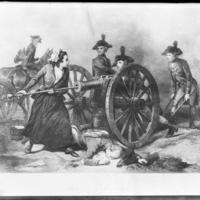
Women served in many capacities during the American Revolution. Thousands of women traveled with their husbands when they served in the Continental Army. Known as "camp followers," they marched with the supply wagons, set up camps nearby. These women…
American Anti-Slavery Society, Broadside, 1836
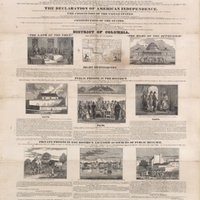
In December 1833, a group of about sixty Black and white men met in Philadelphia and organized the American Anti-Slavery Society to seek the immediate emancipation of enslaved people. The Society viewed slavery as a violation of the principle of…
Nova Britannia Title Page, 1609

By the seventeenth century, England was becoming a leader in the intercontinental trade of goods. Wealthy merchants created joint-stock companies which promoted exploration and increased trade routes. Investors in these companies pooled their…
An Act to Care for Those Wounded in Expeditions Against the Indians, 1644

In 17th century Virginia the tense relations between Indigenous nations and white settlers were marked by three series of wars between 1610 and 1646. While there were three separate phases, the root cause of these wars was the same: continued English…
Washington, Alexandria, and Mount Vernon Electric Railway, Photograph, n.d.

Trolleys, or electric railway streetcars, were a very popular way for people to travel across cities or towns in the late 19th and early 20th centuries. Earlier versions of the trolley, or tram, were drawn by horses. By the late 1800s, however,…
Woman and Child Reading, Photograph, n.d.

In earlier eras, books were expensive luxury items only owned by those who could afford to purchase them. The advent of the printing press made it easier to produce books; however, it was far easier to mass produce newspapers, pamphlets, and other…