
To Be Sold: Virginia and the American Slave Trade

"To Be Sold: Virginia and the American Slave Trade," on display from October 27, 2014–May 30, 2015, offered a frank exploration of Virginia's role in the business of the second middle passage—the forced relocation of two-thirds of a million African Americans from the Upper South to the Cotton South in the decades before the Civil War.
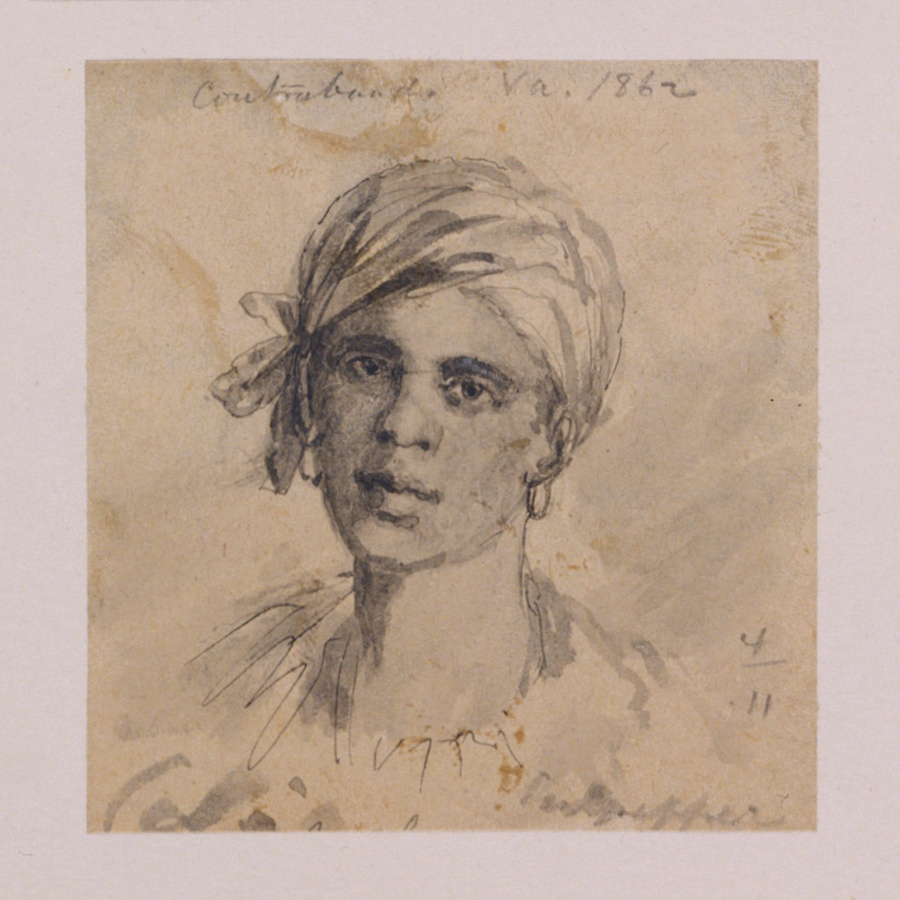
Anchoring the exhibition was a series of images created by English artist Eyre Crowe (1824–1910), who in March 1853 witnessed the proceedings of Richmond's largest business. Crowe turned his sketches and experience into a series of remarkable paintings and engravings that humanized the enslaved and spoke eloquently of the pathos and upheaval of the trade. The story of the American slave trade is one of numbers, but it is also the story of individuals whose families were torn apart and whose lives were forever altered.
The UncommonWealth
Learn more about individuals caught in the domestic slave trade in our series of exhibition-related blog posts in The UncommonWealth blog.
Read
Virginia Untold
The Library of Virginia's collections encompass countless records documenting slavery and the slave trade in the Commonwealth. Learn more about Virginia Untold, our project to provide digital access to these records that illuminate some of the lived experiences of enslaved and free Black and multiracial people.
ExploreTo Be Sold Symposium
The American Slave Trade from Virginia to New Orleans
On March 21, 2015, the Library of Virginia, the Historic New Orleans Collection, and the Midlo Center for New Orleans Studies at the University of New Orleans, co-hosted a one-day, two-city symposium, To Be Sold: The American Slave Trade from Virginia to New Orleans. Morning sessions were held at the Library of Virginia in Richmond, and the afternoon sessions were at the Historic New Orleans Collection. Funding for the symposium was provided by the National Endowment for the Humanities.
Part 1: Slaves Waiting for Sale
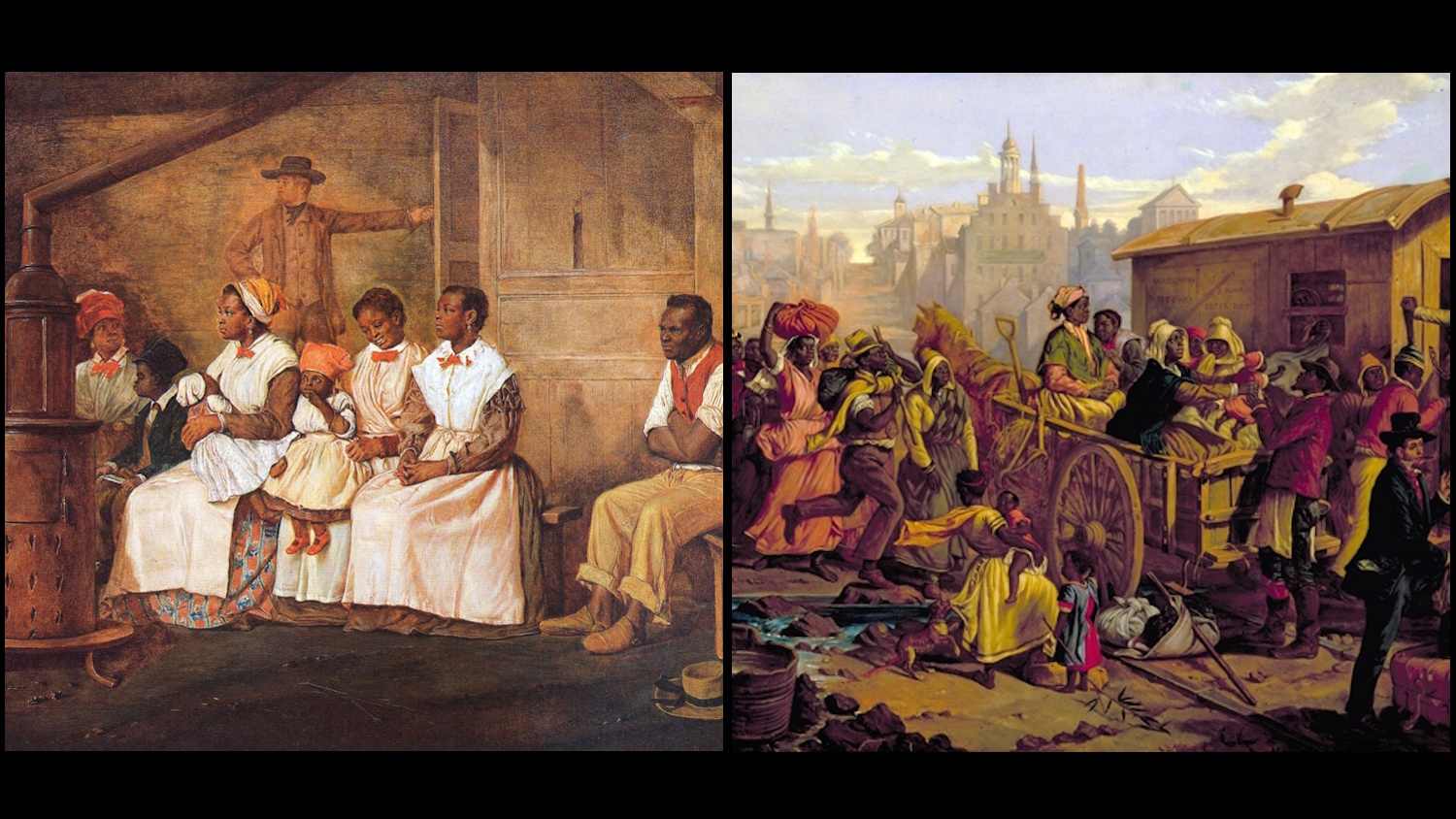
Exhibition curator Maurie D. McInnis, vice provost for academic affairs and professor of art history at the University of Virginia, discussed the two paintings created by British artist Eyre Crowe that capture the complexities and pathos of American slavery. "Slaves Waiting for Sale" shows the tension of enslaved people just before the auction begins. The calmness of that scene contrasts mightily with the chaos and confusion of "After the Sale: Slaves Going South," which shows the enslaved as they’re about to be shipped to the Lower South. Crowe exhibited both paintings in London as his statement on the need to abolish slavery.
Part 2: The Slave Trade in the Upper South
This panel discussion on the slave trade in Virginia and the Upper South was moderated by Charles B. Dew, Ephraim Williams Professor of American History at Williams College. Panelists included Alexandra Finley, Doctoral Candidate at the College of William and Mary; Maurie D. McInnis, Professor of Art History and Material Culture and Vice Provost for Academic Affairs at the University of Virginia; Calvin Schermerhorn, Associate Professor of History at Arizona State University; and Phillip Troutman, Assistant Professor of Writing at The George Washington University.

Part 3: Soul by Soul
Walter Johnson, Winthrop Professor of History and Professor of African and African American Studies, Harvard University, discussed efforts by the United States to reestablish the Atlantic slave trade in the 1850s.

Part 4: The Slave Trade in the Lower South
Lawrence N. Powell, Professor of History (Emeritus) at Tulane University, moderated a panel discussion on the slave trade in the Lower South with Edward E. Baptist, Associate Professor at Cornell University; Stephanie E. Jones-Rogers, Assistant Professor of History at the University of California, Berkeley; and Adam Rothman, Associate Professor of History at Georgetown University.
