
CCRP Grants
During their 1990 session, the General Assembly amended the Code of Virginia, §17.1-275 (A.2.), which increased the circuit court recording fees for land records designated for use in preserving the permanent records of the circuit courts. The sum collected for this purpose shall be administered by the Library of Virginia in cooperation with the circuit court clerks. Thus, was created the Virginia Circuit Court Records Preservation Program (CCRP), directed solely toward the preservation of permanent circuit court records, those in the 120 offices now existing across the commonwealth and those that have been transferred to the Library of Virginia. Since 1991, the CCRP grant program has provided over $36,000,000 to all 120 circuit court clerks’ offices to support preservation efforts.
CCRP GRANT APPLICATIONS
Grant applications for FY 2027 are now closed. Information for the next grant cycle will be posted fall 2026.
Grant Applications:
More information to come Fall 2026

CCRP GRANT RESOURCES
- Specifications for Archival Shelving
- Guidelines for Conservation Contractors
- Conservation Glossary
- Temperature and Humidity Guidelines
specifications:
Finish: To be baked enamel or powder coated, all surfaces cleaned and phosphate washed, and putty or sand in color.
Shelves: Twenty two (22) gauge steel, cold-rolled box edge type (front and back).Front and rear box beam reinforcements are one and one-fourth (1-1/4) inches high by fifteen/thirty-two (15/32) inches wide and welded to shelf on six (6) centers. The corners are to be lapped and welded for rigidity. Each shelf shall support a minimum load of 500 pounds. Shelves to hold one layer of six (6) standard size file boxes weighing forty to fifty pounds each. Each unit will have six (6) shelves and a cap. Shelf sizes will be 42" wide by 30" deep.
Shelf Clips: Fourteen (14) gauge, hot-rolled, one piece construction with two (2) tabs to engage the seven-sixteen (7/16) square holes of the upright on one (1) inch centers. Minimum of four (4) shelf clips per shelf fully rated for all potential shelf loads.
Shelves: Twenty two (22) gauge steel, cold-rolled box edge type (front and back). Front and rear box beam reinforcements are one and one-fourth (1-1/4) inches high by fifteen/thirty-two (15/32) inches wide and welded to shelf on six (6) centers. The corners are to be lapped and welded for rigidity. Each shelf shall support a minimum load of 500 pounds. Shelves to hold one layer of six (6) standard size file boxes weighing forty to fifty pounds each. Each unit will have six (6) shelves and a cap. Shelf sizes will be 42" wide by 30" deep.
Shelf Clips: Fourteen (14) gauge, hot-rolled, one piece construction with two (2) tabs to engage the seven-sixteen (7/16) square holes of the upright on one (1) inch centers. Minimum of four (4) shelf clips per shelf fully rated for all potential shelf loads.
Uprights: Angle posts one (1) inch by two and one-sixteenth (2-1/16) inch thirteen (13) or fourteen (14) gauge, cold-rolled steel to form “T” uprights. Posts shall be punched on one (1) or one and one-half (1-1/2) inch centers with pairs parallel to slots eleven/sixteenth (11/16) inch long, with one slot keyhole-shaped for bolting cross braces and accessories to uprights. All posts shall be one-piece posts.
Opened Uprights: To consist of two (2) sixteen (16) gauge, cold-rolled “T”s, one and one-half (1-1/2) inches by two and one-eight (2-1/8) inches by one-eighth (1/8) inch with two pairs of one (1) inch twelve (12) gauge band cross-braces on all uprights.
Cross-Braces: One (1) inch twelve (12) gauge band cross-braces. Minimum of two (2) pairs of lateral cross-braces per unit and two (2) pairs of upright assembly cross-braces on each upright.
Shim Plate: Twenty two (22) gauge steel and less than two and one-half (2-1/2) inch by two and one-half (2-1/2) inch in size to be used where needed.
Vendor's conservation staff must be specifically proficient in the removal of degraded laminate materials, and in the removal of degraded pressure sensitive tape and other adhesives and old repairs. Staff must also be proficient in 18th and 19th century leather binding repair, including re-sewing, re-backing and rebinding. Encapsulation and post- binding of bound materials will be requested only for extremely brittle materials, as determined by Clerks and LVA - Staff, and for previously laminated materials.
Solvents and other supplies used in these treatments must be of laboratory-grade quality, obtained from conservation and scientific lab suppliers. The Clerks or their designees reserve the right to visit any facility used to conduct conservation work for grant-funded projects, inspect equipment and materials used as well as to observe staff at work. No facility, equipment, materials, or staff may be used to conduct work for grant funded projects without the knowledge of the Clerks.
All work will be inspected by Library of Virginia staff before it is returned to the locality of origin. LVA staff will conduct quality control inspections and reserve the right to return any work not meeting the standards of quality or completion specified in the statement of work. The work must be corrected by the vendor at no additional charge. Failure of the vendor to correct these discrepancies at its own expense, or to come to a mutually acceptable resolution within 30 days after receiving the returned materials, shall constitute default. Any extra transportation costs resulting from such errors shall be paid for by the vendor.
Clerks and LVA-Staff will determine the nature of the treatment required. The vendor may not return work without performing the requested treatment, nor perform other treatment not specifically requested without prior consent. For example, if lamination removal or tape/adhesive removal is requested, this treatment must be performed and completed to the satisfaction of LVA before any payment will be made for services provided to the items in question. If it is determined by the vendor that the requested services cannot be performed for any reason, the items must be returned as is, without any further treatment such as deacidification or encapsulation, and no remuneration may be requested. No partial or incomplete treatment will be accepted or paid for unless prior agreement is made in writing. No treatment may be performed or invoiced that was not previously agreed to in a formal treatment proposal or subsequent approved amendment.
A condition report and treatment proposal must be supplied by the vendor for each individual item submitted to them for treatment prior to the commencement of work.
These documents must be in accordance with the applicable Statement of Work provided by the Clerks. The documents must also be specific to the items to be treated and must not contain generic verbiage or phrases that refer to possible conditions that may or may not exist, such as “mold may be present”, or “may require treatment for mold”. Detailed, itemized cost estimates must also be supplied for each item, which estimates will constitute vendor's binding offer to complete the work at the prices specified if the applicable grant application is approved.
Brittle: Character of an item that is easily broken, weak or inflexible. In paper items, it is usually associated with high levels of acidity.
Cockling: Distortion or waviness caused by rippling of the paper or parchment support.
Deacidification: Application of an alkaline solution to neutralize harmful acidic compounds in an
object.
Delamination: Removal of cellulose acetate or other plastic laminate material using solvent or heat.
Dry-cleaning: Removing surface dirt using specialized dry sponges or grated eraser crumbs.
Encapsulation: A transparent Mylar enclosure used to protect paper artifacts from the environment.
Endpapers: The two or more pages placed in the front and back of a book between its covers and text block. The part of the endpaper nearest the cover is called the pastedown while the part of the endpaper that is not pasted down is called the fly sheet or fly leaf. Endpapers can be blank or printed with a design, map or other information.
Flyspeck: Small dots of fly excretions encrusted onto paper that can cause staining, weakening and other damage.
Foxing: Reddish-brown spots appearing mainly on paper objects, associated with mold growth and/or iron deposits and exposure to high humidity conditions.
Heat-set Tissue: A lightweight paper coated with thermoplastic acrylic adhesives used for mending paper.
Hinge: The interior juncture of the spine and covers of a book. The outside of this same juncture is called the joint.
Humidification: Controlled application of moisture to relax paper items and their supports.
Insect damage: Losses and staining caused by insects feeding off of an object’s compositional material.
Japanese Tissue: All-natural, long-fibred paper produced in Japan and used for mending tears and lining paper supports because of its inherent strength and long-term stability.
Linen tape: A cloth tape with a water-activated adhesive used for hinge repair.
Lining: Supporting and strengthening the original paper by backing it with a secondary support on the reverse side, usually using Japanese tissue.
Loss: A missing area in a physical support, such as a paper page.
Mold: Minute organisms that grow and feed on organic matter in high humidity conditions that can cause staining and weakening.
Mylar: A brand name for archival polyester film.
Onion skin tape: A thin, translucent, brownish colored paper tape historically used to repair paper.
Post-binding: A type of binder using metal posts that hold bound material in place through drilled holes. May be used with or without Mylar encapsulation.
Pressure sensitive tape: Tape with a ready-made sticky adhesive, such as Scotch tape or masking tape.
Red rot: A degradation process found in vegetable-tanned leather which manifests as a powdering of the leather's surface, structural weakness through loss, and a felt-like consistency.
Signature: A gathering of flat pages that are folded, usually in half, to create a unit. A signature usually contains multiples of 4 printed pages.
Text block: The pages of a book as an entire unit. In other words, what is left if one removes the cover of a book.
Installation of adequate climate controls will retard the deterioration of materials considerably. Recommendations are a stable temperature no higher than 70°F and a stable relative humidity between a minimum of 30% and a maximum of 50%. Relative humidity levels at the lower end of this range are preferable since deterioration then progresses at a slower rate. In general, the lower the temperature the better. You should adjust the settings of your HVAC system if the temperature and humidity in your records room are not within the recommended ranges.
Maintaining stable conditions will be crucial. You should choose a temperature and relative humidity within the recommended ranges that can be maintained twenty-four hours a day, 365 days a year. The climate-control system should never be turned off, and settings should not be lowered at night, on weekends, or at other times when the archives room is closed. After making any changes to your HVAC system, temperature and relative humidity should continue to be systematically measured and recorded because this will indicate whether climate-control equipment is operating properly and producing the desired conditions. Remember that changing one factor may alter others. The importance of continued monitoring after the institution of a change cannot be stressed too much.
We recommend you purchase digital indoor thermometer and humidity monitor that will provide you with regular updates on the high and low humidity/temperature, allowing you to compare the current readings to those of the past. Place one in each room where your archival records are stored. Should the measurements be consistently outside the recommended range, you can provide this information to contact the persons responsible for the HVAC system so that they can make the necessary adjustments.
ADDITIONAL RESOURCES
RESOURCES BY TOPIC
The below articles are all found in the CCRP News, which is digitally available through the Library of Virginia catalog.
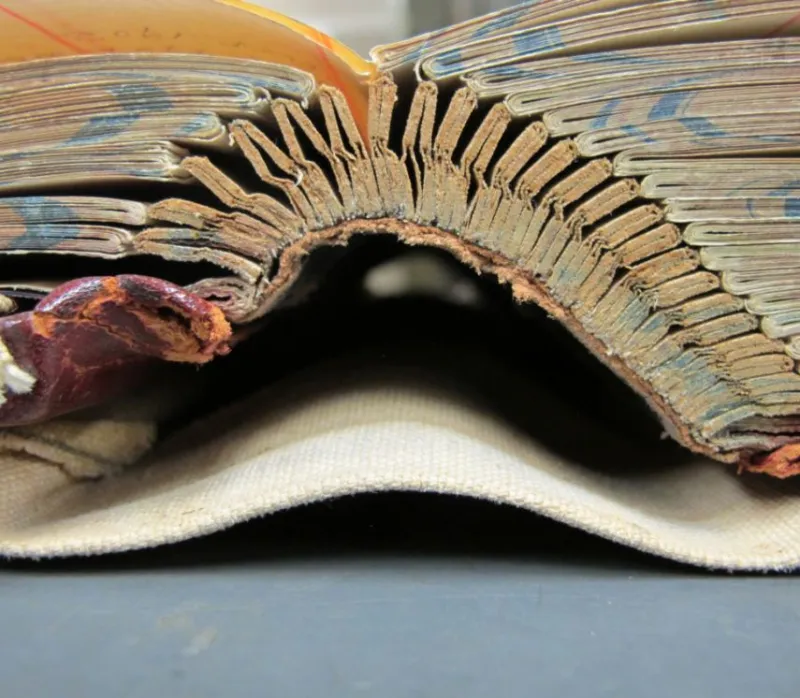
TOPICS CONCERNING CONSERVATION
| Binding & Rebinding | Problems with Binding Repair and Rebinding for Court Record Volumes (No. 11, Winter 2021, Page 7) Rebinding Funded Through the CCRP Grants Program (No. 15, Spring 2024, Page 8) Broken Post Binders (No. 16, Fall 2024, Page 3) Well-Worn Books (No. 9, Winter 2020, Page 4) |
| Cellulose Acetate Lamination | Epidemic in the Courthouse (No. 5, Fall 2018, page 3) Cellulose Acetate Lamination-City of Virginia Beach Vault (No. 11, Winter 2021, Page 9) Cellulose Acetate Lamination Inventory (No. 13, Spring 2023, Page 13) |
| Climate Control | Importance of Proper Environmental Conditions (No. 16, Fall 2024, Page 11) |
| Dehumidifiers | Draining Dehumidifiers (No. 17, Spring 2025, Page 3) |
| Plat Sleeves | A Sticky Problem-Plat Sleeve Deterioration (No. 4, Spring 2018, Page 6) |
| Encapsulation | Encapsulation Over Lamination Is Horrible (No. 10 , Spring 2021, Page 10) Rebinding vs. Encapsulation (No. 3, Fall 2017, Page 4) |
| Facsimiles | Facsimiles Instead of Originals (No. 17, Spring 2025, Page |
| Lamination | Modern Lamination (No. 7, Winter 2019, Page 6) |
| Mold | Mold vs. Court Records (No. 2, Spring 2017, Page 6) Mold-Active vs. Inactive (No. 18, Fall 2025, Page 3) |
| Processing | Basic Processing Does Wonders for Loose Records (No. 3, Fall 2017, Page 7) |
| Silking | Emery Silk Process (No. 8, Summer 2020, Page 6) |
| Stripping | The Problems with Tape Stripping (No. 6, Summer 19, Page 5) |
TOPICS CONCERNING RECORD TYPES
| Criminal Records | Books in the Basement (No. 6, Summer 19, Page 6) |
| Estray Books | Books in the Basement (No. 7, Winter 2019, Page 4) |
| Execution Books | Books in the Basement (No. 4, Spring 2018, Page 8) |
| Judgments | Books in the Basement (No. 8, Summer 2020, Page 4) |
| Local Government Records | Social History & Local Records (No. 2, Spring 2017, Page 7) Court Records Confusion (No. 8, Summer 2020, Page 12) |
| Marriage Records | Books in the Basement (No. 9, Winter 2020, Page Life Cycle of Virginia Marriage Records (No. 15 |
| Minute Books | Books in the Basement (No. 2, Spring 2017, Page 6) |
| Order Books | Books in the Basement (No. 3, Fall 2017, Page 5) |
| Processioners' Returns | Books in the Basement (No. 5, Fall 2018, Page 6) |
| Voter Registers | Virginia Voter Registers and the Significance of the Year 1904 (No. 15, Spring 2024, Page 6) |
CCRP GRANTS REVIEW BOARD
Clerks of the circuit courts are eligible to apply for funds to conserve, secure and increase access to circuit court records. The board members meet once a year to evaluate grant applications.
Five voting members comprise the CCRP Grant Review Board: three circuit court clerks appointed by the president of the Virginia Court Clerks’ Association and two staff members from the Library of Virginia.
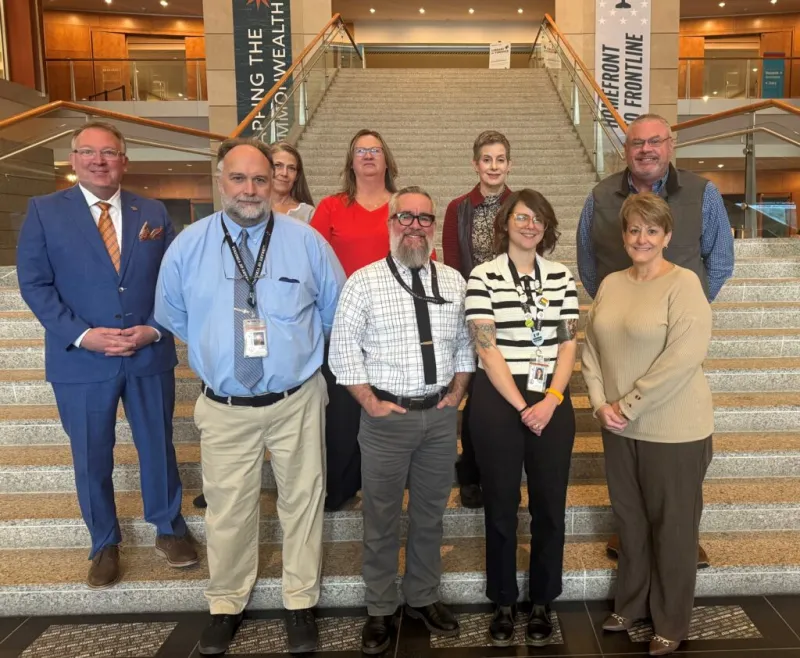
Members of the Grants Review Board
The Honorable Rene Lamey,
Lee County
The Honorable Mark A. (Bo) Taylor,
Scott County
The Honorable Leeta Louk,
Madison County
The Honorable Thomas Mayes,
Surry County (Non-Voting Member)
Vincent Brooks,
Local Records Program Manager
Mckenzie Long,
Senior Local Records Archivist
Circuit Court Records Grant Review Board Minutes
Minutes, 2004-2024, documenting the meetings, activities, discussions, policy decisions, and recommendations of the Circuit Court Records Grant Review Board. Minutes include lists of funded projects by locality that identify the type of project and amount awarded. Types of projects may include equipment, item conservation, preservation, processing, security systems and storage.
Minutes prior to 2020 available upon request.
CCRP GRANTS AWARDED
Summary of Grants Awarded and Amounts Spent (sorted by Locality)
Total Requested: $2,612,807.68
Total Awarded: $2,248,877.52
Total Budgeted: $2,250,000.00
| App. # | Locality | Grant Type | Amount Requested | Amount Awarded | Amount Spent |
|---|---|---|---|---|---|
| 2027FY-026 | Accomack County | Item Conservation | $30,197.52 | $30,197.52 | |
| 2027FY-123 | Albemarle County | Item Conservation | $7,940.00 | $7,940.00 | |
| 2027FY-124 | Albemarle County | Item Conservation | $7,508.60 | $7,508.60 | |
| 2027FY-096 | Alexandria City | Item Conservation | $15,093.79 | $15,093.79 | |
| 2027FY-068 | Alleghany County | Item Conservation | $17,583.95 | $17,583.95 | |
| 2027FY-067 | Amelia County | Item Conservation | $28,627.88 | $28,627.88 | |
| 2027FY-005 | Amherst County | Item Conservation | $12,734.00 | $12,734.00 | |
| 2027FY-131 | Appomattox County | Item Conservation | $13,884.00 | $13,884.00 | |
| 2027FY-053 | Arlington County | Item Conservation | $10,245.00 | $10,245.00 | |
| 2027FY-035 | Augusta County | Item Conservation | $27,651.71 | $27,651.71 | |
| 2027FY-003 | Bath County | Item Conservation | $25,072.06 | $25,072.06 | |
| 2027FY-001 | Bedford County | Item Conservation | $14,914.00 | $14,914.00 | |
| 2027FY-063 | Bland County | Item Conservation | $11,963.00 | $11,963.00 | |
| 2027FY-078 | Botetourt County | Item Conservation | $26,733.78 | $26,733.78 | |
| 2027FY-090 | Bristol City | Item Conservation | $18,003.96 | $18,003.96 | |
| 2027FY-082 | Brunswick County | Item Conservation | $31,962.28 | $31,962.28 | |
| 2027FY-056 | Buckingham County | Item Conservation | $19,862.50 | $19,862.50 | |
| 2027FY-072 | Buena Vista City | Reformatting | $8,200.00 | $8,200.00 | |
| 2027FY-055 | Campbell County | Item Conservation | $22,706.36 | $22,706.36 | |
| 2027FY-109 | Caroline County | Item Conservation | $27,266.24 | $27,266.24 | |
| 2027FY-126 | Carroll County | Item Conservation | $19,039.00 | $19,039.00 | |
| 2027FY-047 | Charles City County | Item Conservation | $7,987.00 | $7,987.00 | |
| 2027FY-073 | Charlotte County | Item Conservation | $17,968.00 | $17,968.00 | |
| 2027FY-132 | Charlottesville City | Item Conservation | $7,171.00 | $7,171.00 | |
| 2027FY-008 | Chesapeake City | Item Conservation | $34,285.08 | $34,285.08 | |
| 2027FY-023 | Chesterfield County | Item Conservation | $17,565.46 | $17,565.46 | |
| 2027FY-040 | Craig County | Item Conservation | $14,145.00 | $14,145.00 | |
| 2027FY-013 | Culpeper County | Item Conservation | $24,975.00 | $24,975.00 | |
| 2027FY-045 | Cumberland County | Item Conservation | $25,443.76 | $25,443.76 | |
| 2027FY-112 | Danville City | Item Conservation | $12,678.00 | $12,678.00 | |
| 2027FY-042 | Dickenson County | Item Conservation | $24,419.00 | $24,419.00 | |
| 2027FY-007 | Dinwiddie County | Item Conservation | $15,969.00 | $15,969.00 | |
| 2027FY-037 | Essex County | Item Conservation | $23,161.58 | $23,161.58 | |
| 2027FY-075 | Fairfax County | Item Conservation | $18,370.40 | $18,370.40 | |
| 2027FY-034 | Fauquier County | Item Conservation | $22,255.14 | $22,255.14 | |
| 2027FY-129 | Floyd County | Item Conservation | $23,439.26 | $23,439.26 | |
| 2027FY-119 | Fluvanna County | Item Conservation | $16,755.00 | $16,755.00 | |
| 2027FY-127 | Franklin County | Item Conservation | $17,684.00 | $17,684.00 | |
| 2027FY-128 | Franklin County | Item Conservation | $4,380.00 | $4,380.00 | |
| 2027FY-019 | Frederick County | Item Conservation | $24,736.23 | $24,736.23 | |
| 2027FY-022 | Fredericksburg City | Item Conservation | $31,277.40 | $31,277.40 | |
| 2027FY-051 | Giles County | Item Conservation | $16,698.50 | $16,698.50 | |
| 2027FY-009 | Gloucester County | Reformatting | $10,000.00 | $10,000.00 | |
| 2027FY-025 | Goochland County | Item Conservation | $38,137.50 | $38,137.50 | |
| 2027FY-102 | Grayson County | Item Conservation | $3,932.60 | $3,932.60 | |
| 2027FY-104 | Grayson County | Item Conservation | $12,099.00 | $12,099.00 | |
| 2027FY-012 | Greene County | Item Conservation | $8,793.00 | $8,793.00 | |
| 2027FY-038 | Greensville County | Item Conservation | $21,416.65 | $21,416.65 | |
| 2027FY-108 | Halifax County | Item Conservation | $24,744.00 | $24,744.00 | |
| 2027FY-130 | Hampton City | Item Conservation | $31,030.62 | $31,030.62 | |
| 2027FY-086 | Hanover County | Item Conservation | $1,265.00 | $1,265.00 | |
| 2027FY-085 | Hanover County | Item Conservation | $13,902.50 | $13,902.50 | |
| 2027FY-146 | Henry County | Item Conservation | $23,383.28 | $23,383.28 | |
| 2027FY-028 | Highland County | Reformatting | $10,000.00 | $10,000.00 | |
| 2027FY-004 | Hopewell City | Reformatting | $10,000.00 | $10,000.00 | |
| 2027FY-024 | Isle of Wight County | Item Conservation | $27,530.64 | $27,530.64 | |
| 2027FY-106 | King and Queen County | Reformatting | $10,000.00 | $10,000.00 | |
| 2027FY-029 | King George County | Item Conservation | $37,720.56 | $37,720.56 | |
| 2027FY-033 | King William County | Item Conservation | $37,053.32 | $37,053.32 | |
| 2027FY-014 | Lancaster County | Item Conservation | $39,853.76 | $39,853.76 | |
| 2027FY-118 | Lee County | Item Conservation | $31,178.00 | $31,178.00 | |
| 2027FY-105 | Loudoun County | Item Conservation | $18,132.00 | $18,132.00 | |
| 2027FY-017 | Lunenburg County | Item Conservation | $40,990.00 | $40,990.00 | |
| 2027FY-020 | Lynchburg City | Item Conservation | $24,436.92 | $24,436.92 | |
| 2027FY-015 | Madison County | Item Conservation | $14,616.64 | $14,616.64 | |
| 2027FY-148 | Martinsville City | Item Conservation | $8,043.00 | $8,043.00 | |
| 2027FY-137 | Mathews County | Item Conservation | $16,554.00 | $16,554.00 | |
| 2027FY-087 | Mecklenburg County | Item Conservation | $29,239.23 | $29,239.23 | |
| 2027FY-114 | Middlesex County | Item Conservation | $14,258.99 | $14,258.99 | |
| 2027FY-097 | Montgomery County | Item Conservation | $22,234.00 | $22,234.00 | |
| 2027FY-098 | Montgomery County | Item Conservation | $9,582.00 | $9,582.00 | |
| 2027FY-092 | Nelson County | Item Conservation | $11,057.00 | $11,057.00 | |
| 2027FY-093 | Nelson County | Item Conservation | $4,525.00 | $4,525.00 | |
| 2027FY-145 | Newport News City | Item Conservation | $15,194.42 | $15,194.42 | |
| 2027FY-030 | Norfolk City | Item Conservation | $40,173.82 | $40,173.82 | |
| 2027FY-061 | Northampton County | Item Conservation | $23,965.32 | $23,965.32 | |
| 2027FY-018 | Northumberland County | Item Conservation | $28,860.17 | $28,860.17 | |
| 2027FY-006 | Nottoway County | Item Conservation | $22,300.05 | $22,300.05 | |
| 2027FY-121 | Orange County | Item Conservation | $36,709.32 | $36,709.32 | |
| 2027FY-041 | Page County | Item Conservation | $12,078.75 | $12,078.75 | |
| 2027FY-054 | Patrick County | Item Conservation | $16,177.00 | $16,177.00 | |
| 2027FY-144 | Petersburg City | Item Conservation | $25,437.00 | $25,437.00 | |
| 2027FY-076 | Pittsylvania County | Item Conservation | $27,215.00 | $27,215.00 | |
| 2027FY-044 | Powhatan County | Item Conservation | $15,678.00 | $15,678.00 | |
| 2027FY-058 | Prince Edward County | Item Conservation | $26,090.08 | $26,090.08 | |
| 2027FY-089 | Prince George County | Item Conservation | $22,696.90 | $22,696.90 | |
| 2027FY-103 | Prince William County | Item Conservation | $19,065.00 | $19,065.00 | |
| 2027FY-134 | Pulaski County | Item Conservation | $24,959.78 | $24,959.78 | |
| 2027FY-094 | Rappahannock County | Item Conservation | $14,806.00 | $14,806.00 | |
| 2027FY-059 | Richmond City | Item Conservation | $24,770.00 | $24,770.00 | |
| 2027FY-133 | Richmond County | Item Conservation | $39,097.50 | $39,097.50 | |
| 2027FY-071 | Roanoke County | Item Conservation | $13,951.00 | $13,951.00 | |
| 2027FY-050 | Rockbridge County | Item Conservation | $19,796.14 | $19,796.14 | |
| 2027FY-079 | Rockingham County | Item Conservation | $9,665.50 | $9,665.50 | |
| 2027FY-136 | Russell County | Reformatting | $9,800.00 | $9,800.00 | |
| 2027FY-010 | Scott County | Item Conservation | $23,688.40 | $23,688.40 | |
| 2027FY-011 | Shenandoah County | Item Conservation | $18,211.46 | $18,211.46 | |
| 2027FY-116 | Smyth County | Item Conservation | $22,088.00 | $22,088.00 | |
| 2027FY-115 | Smyth County | Item Conservation | $20,700.00 | $20,700.00 | |
| 2027FY-083 | Southampton County | Item Conservation | $12,879.00 | $12,879.00 | |
| 2027FY-117 | Staunton City | Item Conservation | $8,060.50 | $8,060.50 | |
| 2027FY-091 | Suffolk City | Item Conservation | $21,708.00 | $21,708.00 | |
| 2027FY-043 | Surry County | Item Conservation | $39,619.75 | $39,619.75 | |
| 2027FY-016 | Tazewell County | Item Conservation | $20,658.00 | $20,658.00 | |
| 2027FY-139 | Virginia Beach City | Item Conservation | $44,661.56 | $44,661.56 | |
| 2027FY-138 | Virginia Beach City | Item Conservation | $8,360.00 | $8,360.00 | |
| 2027FY-110 | Warren County | Item Conservation | $14,357.00 | $14,357.00 | |
| 2027FY-081 | Westmoreland County | Item Conservation | $31,662.72 | $31,662.72 | |
| 2027FY-066 | Williamsburg/James City County | Item Conservation | $6,847.00 | $6,847.00 | |
| 2027FY-101 | Wise County | Item Conservation | $3,859.00 | $3,859.00 | |
| 2027FY-052 | Wythe County | Item Conservation | $20,527.58 | $20,527.58 | |
| 2027FY-111 | York County/Poquoson | Item Conservation | $38,240.15 | $38,240.15 |
CCRP grant funds awarded to participating localities since the grants were first awarded in Fiscal year (FY) 1992 through present
By selecting a county or city on the map, you will be able to see:
- FY1992-Present: total amount of CCRP grant funds received by the locality between fiscal year 1992 -Present
- Range: comparative monetary range for total amount of CCRP grant funds received by the locality between fiscal year 1992
- Total Grants Awarded: the number of individual grants received by the locality
The color filter indicates the range of total amount of CCRP grant funds received by the locality between fiscal year 1992 -present. Click the upper right hand corner of the map for full screen view.
The full data set used to create the map is available as the CCRP Grants Data Tab
CCRP Grants Data Table
| Locality name | FY1992-FY2027 | Range | Total grant awards to 2027 |
|---|---|---|---|
| Accomack County | $ 425,745.06 | $300,000-$500,000 | 21 |
| Albemarle County | $ 283,967.10 | $100,000-$300,000 | 18 |
| Alexandria city | $ 251,790.98 | $100,000-$300,000 | 10 |
| Alleghany County | $ 318,678.21 | $300,000-$500,000 | 30 |
| Amelia County | $ 466,165.86 | $300,000-$500,000 | 32 |
| Amherst County | $ 251,571.00 | $100,000-$300,000 | 16 |
| Appomattox County | $ 161,204.75 | $100,000-$300,000 | 11 |
| Arlington County | $ 404,116.50 | $300,000-$500,000 | 19 |
| Augusta County | $ 642,044.09 | > $500,000 | 36 |
| Bath County | $ 270,772.92 | $100,000-$300,000 | 20 |
| Bedford County | $ 918,889.69 | > $500,000 | 44 |
| Bland County | $ 182,260.22 | $100,000-$300,000 | 17 |
| Botetourt County | $ 302,628.52 | $300,000-$500,000 | 13 |
| Bristol city | $ 214,782.86 | $100,000-$300,000 | 17 |
| Brunswick County | $ 358,275.54 | $300,000-$500,000 | 14 |
| Buchanan County | $ 18,952.09 | $0-100,000 | 1 |
| Buckingham County | $ 262,430.12 | $100,000-$300,000 | 22 |
| Buena Vista city | $ 66,965.00 | $0-100,000 | 7 |
| Campbell County | $ 487,438.11 | $300,000-$500,000 | 24 |
| Caroline County | $ 342,171.11 | $300,000-$500,000 | 18 |
| Carroll County | $ 315,519.81 | $300,000-$500,000 | 19 |
| Charles City County | $ 218,614.50 | $100,000-$300,000 | 19 |
| Charlotte County | $ 617,037.65 | > $500,000 | 34 |
| Charlottesville city | $ 90,397.00 | $0-100,000 | 6 |
| Chesapeake city | $ 640,964.13 | > $500,000 | 25 |
| Chesterfield County | $ 340,011.18 | $300,000-$500,000 | 14 |
| Clarke County | $ 126,625.25 | $100,000-$300,000 | 5 |
| Clifton Forge city | $ 12,389.75 | $0-100,000 | 4 |
| Colonial Heights city | $ 13,897.00 | $0-100,000 | 1 |
| Craig County | $ 270,891.70 | $100,000-$300,000 | 20 |
| Culpeper County | $ 377,732.35 | $300,000-$500,000 | 19 |
| Cumberland County | $ 496,821.33 | $300,000-$500,000 | 32 |
| Danville city | $ 487,424.67 | $300,000-$500,000 | 36 |
| Dickenson County | $ 205,385.00 | $100,000-$300,000 | 20 |
| Dinwiddie County | $ 573,027.33 | > $500,000 | 29 |
| Essex County | $ 379,187.45 | $300,000-$500,000 | 23 |
| Fairfax County | $ 608,763.52 | > $500,000 | 19 |
| Fauquier County | $ 685,308.38 | > $500,000 | 23 |
| Floyd County | $ 329,571.21 | $300,000-$500,000 | 26 |
| Fluvanna County | $ 365,634.00 | $300,000-$500,000 | 23 |
| Franklin County | $ 349,389.05 | $300,000-$500,000 | 24 |
| Frederick County | $ 174,770.03 | $100,000-$300,000 | 8 |
| Fredericksburg city | $ 429,732.15 | $300,000-$500,000 | 24 |
| Giles County | $ 305,050.50 | $300,000-$500,000 | 20 |
| Gloucester County | $ 178,626.00 | $100,000-$300,000 | 7 |
| Goochland County | $ 383,171.20 | $300,000-$500,000 | 25 |
| Grayson County | $ 233,434.10 | $100,000-$300,000 | 15 |
| Greene County | $ 190,539.00 | $100,000-$300,000 | 13 |
| Greensville County | $ 328,336.25 | $300,000-$500,000 | 21 |
| Halifax County | $ 694,060.45 | > $500,000 | 41 |
| Hampton city | $ 259,864.29 | $100,000-$300,000 | 9 |
| Hanover County | $ 446,622.15 | $300,000-$500,000 | 29 |
| Henrico County | $ 400,765.50 | $300,000-$500,000 | 13 |
| Henry County | $ 323,473.30 | $300,000-$500,000 | 19 |
| Highland County | $ 267,370.50 | $100,000-$300,000 | 24 |
| Hopewell city | $ 37,540.00 | $0-100,000 | 2 |
| Isle of Wight County | $ 459,552.44 | $300,000-$500,000 | 32 |
| King and Queen County | $ 237,202.40 | $100,000-$300,000 | 18 |
| King George County | $ 436,997.26 | $300,000-$500,000 | 27 |
| King William County | $ 393,371.21 | $300,000-$500,000 | 21 |
| Lancaster County | $ 239,760.26 | $100,000-$300,000 | 11 |
| Lee County | $ 350,776.00 | $300,000-$500,000 | 23 |
| Loudoun County | $ 856,622.50 | > $500,000 | 41 |
| Louisa County | $ 231,542.80 | $100,000-$300,000 | 12 |
| Lunenburg County | $ 410,373.19 | $300,000-$500,000 | 23 |
| Lynchburg city | $ 417,401.54 | $300,000-$500,000 | 26 |
| Madison County | $ 244,072.14 | $100,000-$300,000 | 19 |
| Martinsville city | $ 121,829.89 | $100,000-$300,000 | 12 |
| Mathews County | $ 265,876.33 | $100,000-$300,000 | 16 |
| Mecklenburg County | $ 415,615.74 | $300,000-$500,000 | 25 |
| Middlesex County | $ 247,703.15 | $100,000-$300,000 | 16 |
| Montgomery County | $ 352,973.91 | $300,000-$500,000 | 29 |
| Nelson County | $ 314,640.63 | $300,000-$500,000 | 29 |
| New Kent County | $ 242,276.13 | $100,000-$300,000 | 18 |
| Newport News city | $ 269,846.37 | $100,000-$300,000 | 17 |
| Norfolk city | $ 196,035.84 | $100,000-$300,000 | 8 |
| Northampton County | $ 363,675.12 | $300,000-$500,000 | 25 |
| Northumberland County | $ 420,953.21 | $300,000-$500,000 | 18 |
| Nottoway County | $ 342,376.78 | $300,000-$500,000 | 22 |
| Orange County | $ 145,674.25 | $100,000-$300,000 | 12 |
| Page County | $ 400,187.35 | $300,000-$500,000 | 26 |
| Patrick County | $ 197,780.33 | $100,000-$300,000 | 14 |
| Petersburg city | $ 382,191.25 | $300,000-$500,000 | 11 |
| Pittsylvania County | $ 442,615.85 | $300,000-$500,000 | 35 |
| Portsmouth city | $ 398,565.28 | $300,000-$500,000 | 13 |
| Powhatan County | $ 259,012.32 | $100,000-$300,000 | 17 |
| Prince Edward County | $ 296,736.32 | $100,000-$300,000 | 22 |
| Prince George County | $ 297,046.39 | $100,000-$300,000 | 17 |
| Prince William County | $ 401,737.82 | $300,000-$500,000 | 19 |
| Pulaski County | $ 316,878.19 | $300,000-$500,000 | 21 |
| Radford city | $ 31,569.40 | $0-100,000 | 6 |
| Rappahannock County | $ 123,437.36 | $100,000-$300,000 | 16 |
| Richmond city | $ 343,710.30 | $300,000-$500,000 | 23 |
| Richmond County | $ 346,349.95 | $300,000-$500,000 | 18 |
| Roanoke city | $ 187,338.00 | $100,000-$300,000 | 4 |
| Roanoke County | $ 242,769.40 | $100,000-$300,000 | 18 |
| Rockbridge County | $ 809,955.89 | > $500,000 | 20 |
| Rockingham County | $ 1,015,935.90 | > $500,000 | 34 |
| Russell County | $ 139,365.50 | $100,000-$300,000 | 15 |
| Salem city | $ 2,060.00 | $0-100,000 | 1 |
| Scott County | $ 498,749.42 | $300,000-$500,000 | 26 |
| Shenandoah County | $ 696,219.32 | > $500,000 | 32 |
| Smyth County | $ 483,870.65 | $300,000-$500,000 | 35 |
| Southampton County | $ 434,509.38 | $300,000-$500,000 | 31 |
| Spotsylvania County | $ 354,064.36 | $300,000-$500,000 | 21 |
| Stafford County | $ 240,246.00 | $100,000-$300,000 | 16 |
| Staunton city | $ 276,133.66 | $100,000-$300,000 | 21 |
| Suffolk city | $ 265,063.50 | $100,000-$300,000 | 18 |
| Surry County | $ 409,159.64 | $300,000-$500,000 | 19 |
| Sussex County | $ 231,816.50 | $100,000-$300,000 | 22 |
| Tazewell County | $ 462,067.84 | $300,000-$500,000 | 28 |
| Virginia Beach city | $ 572,288.46 | > $500,000 | 25 |
| Warren County | $ 253,672.75 | $100,000-$300,000 | 17 |
| Washington County | $ 384,155.31 | $300,000-$500,000 | 28 |
| Waynesboro city | $ 7,500.00 | $0-100,000 | 1 |
| Westmoreland County | $ 455,781.48 | $300,000-$500,000 | 26 |
| James City County | $ 303,579.24 | $300,000-$500,000 | 20 |
| Williamsburg city | $ 303,579.24 | $300,000-$500,000 | 20 |
| Winchester city | $ 97,416.00 | $0-100,000 | 5 |
| Wise County | $ 433,354.85 | $300,000-$500,000 | 46 |
| Wythe County | $ 267,051.35 | $100,000-$300,000 | 13 |
| York County | $ 360,919.80 | $300,000-$500,000 | 14 |